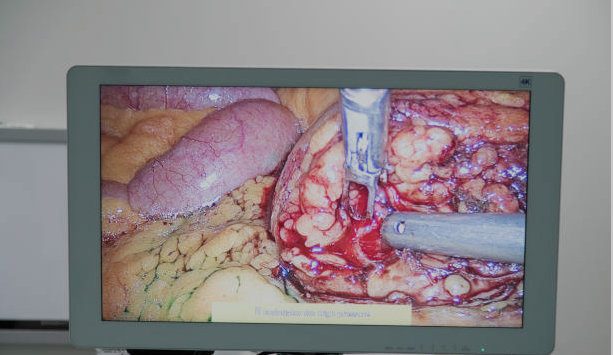
In the high-stakes environment of a modern GI suite, the difference between a routine procedure and a life-saving discovery often comes down to what the physician can see in real-time. While the endoscope biopsy channel is the vital conduit for diagnostic tools, its effectiveness is strictly limited by the quality of the visual field. This is why the integration of a 4k medical monitor for endoscopy has become a gold standard in modern hospitals.
In this article, we will discuss how ultra-high-definition clarity enhances the navigation of surgical instruments and why superior visualization is the key to maximizing the diagnostic yield of every biopsy. Without any further delay, let’s begin with our article!
What Role Does a 4k Medical Monitor for Endoscopy Play in Visualizing the Endoscope Biopsy Channel?
The imaging system in endoscopy acts as the physician’s eyes inside the body. The camera captures the internal view, and the monitor displays that information in real time. This means the quality of the display directly influences what the clinician can see and interpret during a procedure.
A 4k medical monitor for endoscopy delivers a resolution of 3840 × 2160 pixels, which provides four times the detail of standard Full HD displays. This higher pixel density allows medical professionals to observe tiny anatomical features with remarkable clarity.
When examining the endoscope biopsy channel, accurate visualization is essential. The biopsy channel is the internal passage within the endoscope through which biopsy forceps, brushes, or needles are inserted. Doctors rely on visual feedback to guide these instruments toward specific tissues or lesions.
A high-resolution monitor improves the ability to see:
- The precise opening of the biopsy channel
- The movement of biopsy tools
- The surrounding mucosal tissue
- Small vascular structures or lesions
Without sufficient image clarity, the physician may struggle to position the instrument correctly. A detailed display ensures that every movement of the biopsy tool is visible, which significantly improves procedural accuracy.
How Does High-Resolution Imaging Improve Accuracy in the Endoscope Biopsy Channel?
The process of collecting a biopsy sample requires precise targeting of suspicious tissue. Many abnormalities, such as early cancer lesions or small polyps, are extremely subtle and difficult to detect.
High-resolution imaging significantly improves diagnostic visibility. Advanced endoscopic systems enable physicians to detect micro-level tissue patterns and vascular structures that may not be visible with lower resolution equipment. When combined with a 4k medical monitor for endoscopy, these imaging systems produce extremely sharp images. This allows physicians to distinguish between healthy tissue and abnormal growths more effectively.
For biopsy procedures, this improvement has several benefits.
First, it increases targeting precision. A clear display helps doctors guide biopsy tools directly to the suspicious area rather than relying on estimation. Second, it reduces the chance of sampling errors. If the wrong tissue is collected, the biopsy result may not accurately represent the patient’s condition.
Third, it supports early disease detection. Early lesions often appear as small variations in mucosal texture or color. A higher resolution display helps clinicians identify these subtle changes.
For example, in gastrointestinal endoscopy, a physician may need to identify a tiny polyp or early-stage lesion hidden within complex mucosal folds. A 4K display reveals these structures with sharper edges and improved contrast.
Why Is Visual Clarity Critical for Safe and Effective Endoscopic Biopsies?
Safety and accuracy are two of the most important goals in any medical procedure. In endoscopy, both depend on the physician’s ability to see internal structures clearly.
Minimally invasive procedures limit direct visibility. Doctors must rely entirely on the video feed displayed on the monitor. If the image quality is poor, the physician’s ability to make correct decisions becomes limited. A 4k medical monitor for endoscopy addresses this challenge by delivering sharper images, improved brightness, and enhanced color reproduction. These features allow physicians to interpret tissue characteristics more accurately.
Color accuracy is especially important. Human tissue often displays subtle variations in color that indicate inflammation, bleeding, or abnormal growth. Advanced medical displays reproduce these colors faithfully, helping clinicians identify important clinical signs.
High-quality monitors also improve depth perception. Although endoscopy produces a two-dimensional image, increased clarity allows physicians to better interpret spatial relationships between structures. This helps them navigate the endoscope and biopsy tools safely.
How Do Advanced Endoscopy Monitors Support Modern Imaging Technologies?
Modern endoscopy relies on more than basic video imaging. Advanced imaging technologies are now integrated into many endoscopic systems to improve diagnostic performance.
Examples include:
- Narrow Band Imaging (NBI)
- Digital chromoendoscopy
- Fluorescence imaging
- Artificial intelligence detection systems
These technologies highlight specific tissue structures, blood vessels, or abnormal areas. However, their effectiveness depends heavily on display quality. A 4k medical monitor for endoscopy ensures that these enhanced imaging modes are presented with maximum detail. High-resolution displays allow physicians to observe subtle visual patterns generated by these technologies.
For instance, digital chromoendoscopy enhances mucosal patterns to identify abnormal tissue more easily. If the monitor cannot accurately display these patterns, the benefit of the technology is reduced. Similarly, fluorescence imaging may highlight certain tissues during cancer detection or surgical navigation. A high-quality display ensures that these signals remain visible and distinguishable.
Another advantage of advanced monitors is their ability to support multiple input sources. In modern operating rooms, clinicians may need to view several imaging streams simultaneously. Picture-in-picture or split-screen modes allow doctors to observe:
- The primary endoscopic image
- Fluoroscopic imaging
- Patient vital signs
- Additional camera feeds
This integrated view improves decision-making and workflow efficiency during complex procedures. As medical imaging technologies continue to evolve, advanced monitors ensure that healthcare providers can fully benefit from these innovations.
Conclusion:
Endoscopic excellence begins with visual clarity. By pairing the high-resolution power of a 4k medical monitor for endoscopy with the functional precision of the endoscope biopsy channel, clinicians can navigate complex anatomy with unparalleled confidence.
Investing in advanced imaging is more than a technical upgrade. It is a commitment to greater diagnostic accuracy, procedural safety, and superior patient outcomes.
Source: FG Newswire