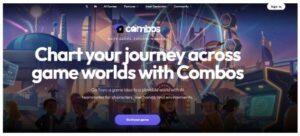
Indie game development has always been a negotiation between what you want to make and what you can actually execute with the resources available to you. For most solo developers and small teams, that negotiation involves a lot of cutting — features that get shelved, mechanics that get simplified, entire systems that get abandoned because there isn’t enough time or enough people to build them properly.
The AI game agent doesn’t solve every problem an indie developer faces, but it removes several of the most frustrating ones. Pair that with the rise of vibe coding game approaches, where mood and feel drive creation rather than technical planning, and you have something that fundamentally changes what a solo developer can ship in a given year.
The Indie Developer’s Resource Problem, Stated Plainly
Most indie developers are working alone or with one or two collaborators. They’re doing game design, visual design, sound sourcing, business development, social media, and actual programming all at the same time. Even experienced developers with strong technical skills spend enormous amounts of time on tasks that have nothing to do with the creative decisions that make a game good.
The time cost of that is real. A feature you wanted to build in month two gets pushed to month four, then month six, then it gets cut because the release date is approaching, and something has to give. The agent compresses that timeline by handling the execution layer while you stay in the creative and strategic layer.
What an Agent Does That a Simple Tool Never Could
There are plenty of tools that speed up parts of game development. Asset generators, level design editors, and behaviour tree builders. Each one helps, but each one requires you to show up with a plan and use it correctly. They’re instruments. You still have to play them.
An agent is different because it brings its own planning to the table. You describe what you want. The agent figures out what needs to exist for that to work, builds it, checks its own output, and flags anything that doesn’t line up with your original intent.
How Indie Developers Get the Most Out of Combos’ AI Agent
Step 1: Use combos.fun to prototype a new game concept the same afternoon you think of it
One of the most valuable things an indie developer can do is test ideas before committing to them. The agent makes this cheap — not just financially, but in terms of time and mental energy. Describe the concept, let Boo build a working prototype, and play it that day.
Step 2: Describe the full scope to Boo — mechanics, visual style, target audience — and let it plan autonomously
The more context you give Boo upfront, the more accurate the GDD it produces. Treat this briefing the way you’d treat a conversation with a contract developer — be specific about what matters, honest about what you’re uncertain about, and clear about who the game is for.
Step 3: Review and redirect the GDD with a producer mindset — cut scope, sharpen focus, prioritise the fun
The GDD Boo produces is a plan, not a contract. Indie developers are usually good at knowing when something is overcomplicated. Apply that instinct here — cut anything that doesn’t serve the core loop, even if it sounded good in the brief.
Step 4: Use Boo’s iterative refinement to polish specific systems without rebuilding the whole game
Once the base game is playable, targeted refinement via natural language lets you work on one system at a time. The agent updates only what you describe, leaving everything else intact. This is the kind of iteration that used to require careful version management and backup systems.
From Idea to Prototype Without Losing a Week
The traditional prototyping cycle for an indie game involves setup, scaffolding, placeholder assets, basic mechanic implementation, and then — finally — testing whether the core idea is actually fun. That process takes days at a minimum and often longer. By the time you know whether the idea works, you’ve already invested significant time in it.
With an agent handling the scaffolding and asset generation, that window compresses to a single session. The feedback you get from a playable prototype on day one is vastly more useful than the feedback you get from a design document on day one. You can feel whether something works. You can’t feel a spreadsheet.
Scaling Ambition Without Scaling Your Team
One of the quiet tragedies of indie development is that the scope of what you want to make is usually larger than what you can execute alone. Not by a little — by a lot. Most developers have shelved entire game concepts because they couldn’t figure out how to build them with the time and skills available.
An agent doesn’t hire you a team. But it does handle enough of the execution layer that your effective output increases significantly. A developer who could previously ship one small game a year might find they can prototype four ideas and fully develop two of them. That’s not just a productivity improvement — it’s a different creative life.
The Competitive Edge That’s Still Underused
Here’s the honest reality: most indie developers haven’t integrated AI agents into their workflow yet. Some have experimented with AI tools for specific tasks — generating concept art, writing dialogue, suggesting level layouts. But using a full agent as a core part of the development process is still uncommon enough that the developers doing it have a real advantage.
Conclusion
The AI game agent isn’t a shortcut to making games without putting in real work. It’s a reallocation of where that work goes — away from setup and scaffolding, toward design and judgment. For indie developers, where every hour counts, that reallocation changes what’s possible.
Source: FG Newswire