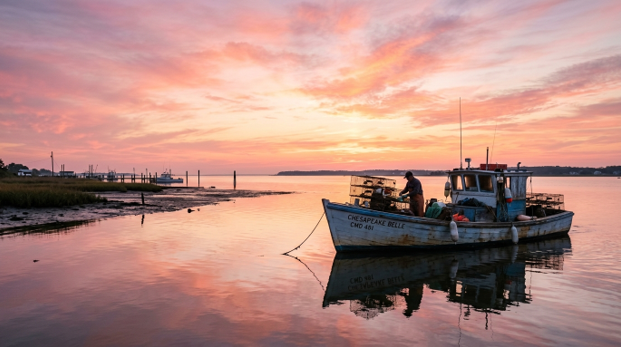
Maryland’s Eastern Shore is the peninsula east of the Chesapeake Bay, connected to the rest of the state by the Bay Bridge out of Annapolis. It is a region defined by water: tidal creeks, working harbors, and the bay itself, which is never far from any drive you are likely to take.
This guide is a practical sketch of the shore for travelers who have not visited before. The towns, the waterways, and the drives that connect them form the basic structure of most weekends here.
Towns Worth Planning Around
St. Michaels is the town most first-time visitors arrive with in mind. A long main street lined with restaurants and shops runs down to a small harbor, where the Chesapeake Bay Maritime Museum sits on the water. The museum is worth a long visit, especially for travelers interested in the region’s skipjack and oyster-dredging history.
Oxford, across the Tred Avon River from St. Michaels, is quieter and more residential. The ferry that connects the two towns has been running for more than three centuries and is the most enjoyable way to see the river from the water.
Easton, inland and the county seat, is the practical center of the region. Its restaurants and cafes stay open later than the harbor towns, and the Avalon Theatre on a weekend evening is one of the steadier cultural anchors of the shore.
Chestertown, further north, is often overlooked by first-time visitors. Its main street along the Chester River is quieter than St. Michaels and has a working farmers’ market on Saturday mornings that rewards an early stop.
The Waterways
The Chesapeake Bay itself is the defining feature of the region, and most travelers underestimate how much of the shore they cannot see without a boat. Sailing charters out of St. Michaels and Oxford run through most of the warm months and are the reliable way to understand the scale of the bay.
The tidal rivers that feed into the bay, including the Miles, the Tred Avon, and the Chester, are the calmer alternatives. Kayak rentals run out of several harbor towns, and a two-hour paddle is usually enough to see an osprey nest, a working fish house, or a blue heron working a shallow creek.
For travelers reviewing a closer look at Chesapeake Bay coastal areas to plan a base, the choice usually comes down to whether you prefer harbor walks or a quiet rural road as the view from the morning coffee.
The Drives
U.S. 50 runs through the middle of the shore as the main east-west route. Most travelers cross it to reach the waterfront towns on either side, and the drive is unremarkable by itself.
The quieter network of state routes connects the towns more directly. Route 33 runs out to St. Michaels and continues to Tilghman Island at the tip of the peninsula, which is one of the last working watermen communities on the bay. The drive out and back takes about an hour and is worth the detour for travelers who want a less-edited version of the region.
Route 333 down to Oxford is shorter and ends at a deep bend in the Tred Avon that marks one of the quieter Sunday mornings available on the shore. A slow drive with a stop at the Oxford Community Center is a reliable off-peak itinerary.
Food, Seafood, and Small Finds
Blue crab, rockfish, and local oysters are the defining Chesapeake ingredients. The Crab Claw in St. Michaels, Latitude 38 in Oxford, and Ava’s in St. Michaels are three that consistently turn up on locals’ recommendations, though menus change with the seasons.
Farm stands and small farmers’ markets are scattered across the back roads in the warm months. The shore has a strong farm-to-table thread that runs through many of the inn dining rooms, and a picnic from a roadside stand is often the more memorable version of a mid-week dinner.
Seasonal Notes
Spring and fall are the quieter, more comfortable seasons. Summer brings the biggest crowds and the highest prices, particularly around the Fourth of July and Labor Day. Winter is the least traveled season but has the best reservation availability and a kind of stillness along the harbors that the warmer months do not offer.
The shore rewards travelers who plan loosely and leave time for slow drives between towns. Most weekends remembered here are the ones where a single unplanned stop, at a crab shack or a ferry landing, ends up defining the trip.
Source: FG Newswire