Introduction
On New Zealand farms and lifestyle blocks, good timber is often already growing on the property. A macrocarpa shelterbelt reaches the end of its life, a stand of radiata pine needs thinning, or a storm brings down mature trees that would otherwise be left to rot. Carting those logs to a distant mill is costly, and buying sawn timber back again doubles the expense. A portable sawmill changes the equation by turning logs into usable boards exactly where they fall, so a farmer in the Waikato or a block owner in Canterbury can mill fence rails, building timber, and slabs from their own trees without leaving the gate.
How a Portable Sawmill Works
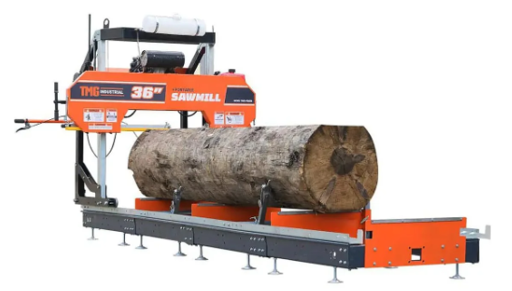
A portable sawmill is a band-blade cutting machine that runs along a track over a clamped log. The log sits on a frame while a saw head, carrying a thin band blade between two wheels, travels the length of the timber and slices off a board with each pass. A four-post carriage keeps the head square and stable as it moves.
Value and Efficiency
Milling on site removes the two largest costs in using farm timber: transport and purchase. Instead of paying to haul logs out and freight sawn boards back, a band sawmill produces lumber on the spot, adding real value to trees that might otherwise be firewood or waste. After a storm flattens a shelterbelt near Taranaki, an owner can convert the windthrow into fencing and shed timber, recovering value from a loss.
Engine and Build
The capability of a log milling machine rests on its engine, blade, and carriage rigidity. A twin-cylinder petrol engine of around twenty-one horsepower drives the band through dense, knotty timber, while a thirty-six inch cut width and thirteen foot log length suit large farm trees. An anti-tip, self-locking four-post carriage holds the saw head securely and keeps every cut straight.
Performance Factors
Several conditions decide how a portable band sawmill performs in the paddock:
- Engine power for the timber being cut
- Blade sharpness and correct tension
- Log diameter and length within the rating
- Level, firm ground under the frame
- Clean logs free of embedded wire or stone
On older boundary trees in Northland, millers check for fencing staples and wire grown into the trunk, since hidden metal is the fastest way to ruin a band blade.
Safe Operating Practices
A moving band blade demands respect. Keep hands and bystanders clear of the blade path, and confirm the log is firmly clamped before each cut. Wear eye and ear protection, stop the engine before changing or tensioning the blade, and set the mill on level ground so the carriage cannot shift under load.
What Buyers Should Weigh
Choosing a portable sawmill is a question of matching the machine to your trees. Before buying, weigh these factors:
- Cut width and log length for your timber
- Engine power for the species you mill
- Carriage stability and locking design
- Blade availability and ease of changing
- Portability across your property
- Warranty and parts support within New Zealand
Industry Outlook
As New Zealand landowners look to use their own resources and cut waste, on-site milling is spreading from commercial operators to farms and lifestyle blocks. Interest in sustainable, low-transport timber and in recovering value from storm damage is driving the trend, and machines are growing more capable and easier to move. The expanding range of sawmills and timber processing equipment reflects that shift, and portable milling will keep turning standing and fallen trees into useful timber right where they grow.
Source: FG Newswire