Why Do Australians Buy Japanese Import Cars in Australia?
Japanese import cars in Australia appeal to buyers seeking Japanese market people movers, vans, kei vehicles and performance variants that were never sold new here. The trade-off is straightforward: model-specific parts and slower servicing can matter more than the purchase price, especially outside major cities.
Why Japanese Import Cars in Australia Fill a Real Gap
Japanese import cars in Australia make sense when the buyer needs a body style or variant that local new-car ranges do not provide. Japanese-market people movers, compact vans, kei vehicles and performance cars are recurring reasons to look overseas. That is a different decision from simply hunting for a cheaper version of a familiar hatchback.
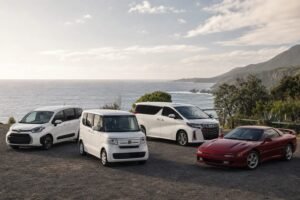
The current range illustrates the spread. The Toyota Sienta is a compact hybrid people mover, while the Toyota Alphard offers a larger family-focused shape. The Honda N-Box takes the kei wagon approach, and the Mitsubishi Gto represents the performance end of the market. None should be treated as an interchangeable purchase.
The sensible starting point is the job. A family in Melbourne may value an easy-to-place second car. A buyer near Cairns may care more about air conditioning and wet-season use. Someone leaving Perth for long regional trips needs to think about distance, road surfaces and support before falling for an unusual specification.
City Car, Family Car or Touring Tool?
The right Japanese import depends first on where the vehicle will work. Sealed roads are generally good in and between Australia’s capitals, but long unsealed stretches begin once a trip leaves them. Several hundred kilometres between towns are ordinary outside the east coast corridor, so a city-only choice can become tiring when used for regional travel.
For metropolitan commuting, compact hybrids and hatchbacks deserve attention. The Toyota Aqua, Nissan Note, Toyota Yaris and Toyota Prius are represented in current stock, with hybrid automatic examples across those model lines. Their appeal is strongest for buyers who spend most of their time in Sydney, Melbourne, Brisbane or another large urban area and want a smaller daily vehicle.
Family buyers have a separate calculation. The Nissan Serena, Toyota Noah and Toyota Sienta offer people-mover layouts, while the Honda Shuttle sits closer to a flexible hatchback. More seats do not automatically make a vehicle better for every household. Check parking space, luggage needs and the trips the family actually makes.
The Ownership Trade-Off Behind Rare Models
Rare Japanese-market models can be rewarding to own, but parts and servicing are the point where enthusiasm meets routine. Support is strong for mainstream Japanese marques. It is weaker and often slower for Japan-only models, so a buyer should identify the service path before committing to an unfamiliar vehicle.
That matters differently by vehicle. A Toyota Hiace used as a tradesperson’s van cannot sit idle while a model-specific component is sourced. The same concern applies to a Toyota Liteace working regular deliveries. A family using a Honda N-Box as a second car may have more tolerance for waiting, but only if another vehicle is available.
Ask a workshop what it can support, then check which components are shared with wider model families and which are specific to the Japanese version. Do not assume a familiar badge guarantees immediate access to every part. The model code on the listing is useful here, because it gives the workshop something more precise than a name alone.
Japanese Import Cars in Australia Need a Regulation Check
Import eligibility in Australia must be confirmed for the exact model and year before a buyer proceeds. Australia uses a Commonwealth scheme, and eligibility windows change. A vehicle appearing in an overseas catalogue is not proof that it can be brought in and registered under the buyer’s circumstances.
This check is especially important with unusual older vehicles and Japan-only variants. The live range includes a 1995 Mitsubishi Gto, a 1999 Mitsubishi Strada motorhome and a 1999 Toyota Camroad motorhome. Those examples show why the model, year and intended use need to be checked together rather than treated as a simple make-and-model search.
Use the model’s own import page to confirm the current position, and check again before money changes hands. The answer can change as schemes and eligibility windows are updated. A seller’s attractive listing is only the beginning of that process.
How to Compare a Japanese Import Before Buying
A proper comparison starts with the vehicle’s individual records, not the reputation of the model. Auction grade, odometer reading, equipment and condition belong to a particular unit. They do not describe every Toyota Serena, Toyota Prius or Mercedes-Benz E-Class available from Japan.
Look at the current listing, confirm the model code and ask questions about the exact vehicle. The available range changes weekly, so the stock page is the place to check what is actually available. Current examples include 15 Nissan Serena units, 14 Toyota Hiace units and 8 Honda N-Box units, but those counts are temporary rather than a promise of future supply. The used cars listings show the live selection, which is more useful than relying on an old article.
Finally, match the vehicle to its hardest task. Test the logic against a hot inland drive, a coastal environment, a school run, a trailer, a work load or a dirt access road. Air conditioning is essential across Australia’s climate range, and coastal salt deserves attention near the water. If the car only works in the best-case scenario, choose another one.
Where to Start Your Search
The best first step is to shortlist by use, then verify each candidate’s current status and support options. A buyer who wants a compact urban hybrid should compare the Toyota Aqua, Nissan Note and Toyota Yaris. A family needing flexible seating can look at the Nissan Serena, Toyota Noah, Toyota Sienta or Toyota Alphard. A working buyer should begin with the Toyota Hiace or Toyota Liteace.
Carbarn Australia sources used vehicles at Japanese auctions, inspects them and ships them to Australian buyers. That process does not remove the buyer’s responsibilities. Confirm the exact vehicle, ask about condition, check the model’s import page and speak with a workshop before choosing a Japan-only model. The Carbarn Australia catalogue is a sensible place to begin that shortlist.
Do not buy a rare model solely because it is absent from local showrooms. Buy it because its layout, size and intended use fit your life, and because you have a workable plan for servicing it.
Frequently Asked Questions
What Japanese Import Cars Are Available in Australia?
Available examples change weekly, but the current range includes Nissan Serena, Toyota Hiace, Honda N-Box, Toyota Noah, Toyota Sienta, Toyota Alphard and several hybrid hatchbacks. Availability belongs to individual listings, not permanent model promises, so check the current stock page before choosing a vehicle.
Are Japanese Market Cars Harder to Service in Australia?
Usually, Japan-only models require more planning. Support is strong for mainstream Japanese marques, while parts and servicing can be weaker and slower for Japan-only vehicles. Ask a local workshop about the exact model code before buying, particularly if the vehicle will be used for work or long regional trips.
Can I Assume a Japanese Car Is Eligible for Australia?
No. Australian import eligibility depends on the model and year under a Commonwealth scheme, and eligibility windows change. Check the vehicle’s model-specific import page before proceeding. A listing or overseas availability does not by itself confirm that the exact vehicle can be imported and registered.
Which Japanese Import Suits Regional Australian Driving?
The best choice depends on the vehicle’s job and route. Regional buyers should consider long distances, unsealed stretches, heat, dust and air conditioning. A city-focused hatchback may suit metropolitan commuting, while a van, people mover or touring vehicle may fit buyers regularly travelling between towns.
Source: FG Newswire