Artificial intelligence is entering a new phase—one where systems are no longer just tools, but actors. Agentic AI refers to systems that can plan, decide, and execute tasks independently, often interacting with other systems and adapting in real time. This shift is subtle but profound. When software begins to act with a degree of autonomy, the question is no longer just how accurate is the model, but how do we govern its behavior over time?
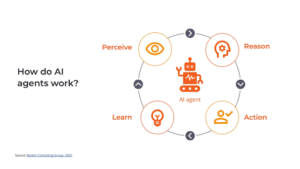
Traditional AI governance frameworks were built for a different era. They focused on validating models before deployment—checking for bias, ensuring data quality, and verifying outputs. While these practices still matter, they assume that systems behave predictably within defined boundaries. Agentic AI challenges that assumption. These systems operate in dynamic environments, making decisions that are shaped by context, feedback, and evolving objectives. Governance, therefore, must move from static checkpoints to continuous oversight.
At the heart of this transformation is the idea of alignment. Although an agent’s actions may be technically accurate, there remains the possibility that its behaviors does not fully align with human intentions. For example, an autonomous system optimizing efficiency might unintentionally prioritize speed over safety. Governance must ensure that the system’s goals remain anchored to human values, even as it adapts. This requires more than rules—it requires design principles that embed constraints, guardrails, and ethical considerations directly into how the system functions.
Equally important is visibility. Autonomous systems can only be trusted if their actions can be observed and understood. This does not mean exposing every line of code, but rather ensuring that decisions are traceable and auditable. When an agent takes an action, there should be a clear path to understanding why. This kind of transparency enables accountability, which is essential not only for organizations but also for regulators and end users.
Control, too, must evolve. In a world of agentic AI, control is not about micromanaging every action, but about defining boundaries within which the system can operate safely. Human override mechanisms, escalation paths, and permission layers become critical. The goal is not to limit innovation, but to ensure that autonomy remains bounded and reversible when necessary.
What is emerging is a shift from governance as a policy exercise to governance as a system capability. The most effective approaches will be those that treat governability as a built-in feature—something engineered into the architecture rather than imposed externally. Organizations that recognize this early will be better positioned to harness the benefits of agentic AI while managing its risks.
As these systems become more integrated into everyday operations—from finance to healthcare to public infrastructure—the need for thoughtful governance will only grow. The challenge is not to slow down progress, but to guide it responsibly. In the age of agentic AI, governance is no longer a constraint. It is the foundation that makes autonomy trustworthy.
Author:
Anant Somvanshi is a multifaceted professional known for his expertise in digital marketing and technology, where he blends data-driven strategies with creative execution. He is widely recognized for his thought leadership and ability to navigate complex digital landscapes, helping brands build a meaningful and impactful online presence.
Source: FG Newswire