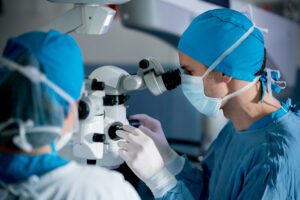
As people enter their 40s, many begin to notice changes in their vision, particularly when reading small print or focusing on nearby objects. This natural age-related condition, known as presbyopia, often leads to greater dependence on reading glasses or bifocals. Some individuals may also develop early lens changes that affect the quality of their vision.
PRELEX (Presbyopic Lens Exchange) is a vision correction procedure designed for suitable candidates who want to reduce their dependence on glasses while addressing age-related lens changes. Understanding how the procedure works and who may benefit from it can help individuals make informed decisions about their eye health.
What Is PRELEX Surgery?
PRELEX, or Presbyopic Lens Exchange, is a surgical procedure that replaces the eye’s natural lens with an artificial intraocular lens (IOL). Unlike laser vision correction procedures that reshape the cornea, PRELEX addresses changes occurring inside the eye’s natural lens.
The implanted lens is selected based on the patient’s vision needs and overall eye health.
How PRELEX Works
During the procedure:
- The natural lens is removed.
- An artificial intraocular lens is implanted.
- The new lens helps improve focusing ability.
- Vision correction is customized for the individual.
The surgery is generally performed on one eye at a time, depending on the treatment plan.
How PRELEX Differs from LASIK
LASIK reshapes the cornea to correct refractive errors, while PRELEX replaces the aging lens. This makes PRELEX particularly suitable for many individuals over 40 who are developing presbyopia or early cataract changes.
Why Vision Changes After the Age of 40
The eye’s natural lens gradually becomes less flexible with age, making it harder to focus on nearby objects. This is a normal part of aging and affects nearly everyone over time.
Some individuals may also notice reduced contrast sensitivity or increased glare while driving at night.
Common Vision Changes
People over 40 may experience:
- Difficulty reading small print
- Holding reading material farther away
- Eye strain
- Blurred near vision
- Increased dependence on reading glasses
These changes usually progress gradually.
Is Presbyopia Preventable?
Presbyopia is a natural aging process and cannot be prevented. However, several vision correction options are available depending on individual needs.
Benefits of PRELEX Surgery
PRELEX offers several potential advantages for appropriately selected patients. The procedure is designed to improve overall visual function while reducing dependence on corrective eyewear.
Every patient should undergo a detailed eye examination before considering surgery.
1. Reduced Dependence on Glasses
Many patients experience improved vision at multiple distances after receiving suitable intraocular lenses.
This may reduce the need for:
- Reading glasses
- Distance glasses
- Bifocals
- Progressive lenses
The degree of spectacle independence varies between individuals.
2. Improved Quality of Vision
Modern intraocular lenses are designed to provide clearer vision while supporting everyday activities such as reading, driving, and using digital devices.
Who Is a Good Candidate for PRELEX?
Not everyone experiencing age-related vision changes is an ideal candidate for PRELEX surgery.
A comprehensive eye examination helps determine whether the procedure is appropriate.
You May Be a Suitable Candidate If You:
- Are over 40 years of age
- Have presbyopia
- Depend on reading glasses
- Have stable eye health
- Do not have significant untreated eye disease
Your ophthalmologist evaluates several factors before recommending treatment.
When PRELEX May Not Be Appropriate
Patients with certain retinal disorders, uncontrolled glaucoma, severe dry eye, or other eye diseases may require alternative treatment approaches.
What to Expect During the Procedure
PRELEX is typically performed as an outpatient procedure, allowing most patients to return home the same day.
The procedure itself usually takes only a short time for each eye.
Before Surgery
Patients undergo:
- Comprehensive eye examination
- Vision measurements
- Lens selection
- General health assessment
- Proper planning helps optimize surgical outcomes.
In Mumbai, many individuals exploring advanced vision correction options compare eye surgeon experience, lens technology, and comprehensive eye care services before choosing a trusted eye care center to undergo PRELEX surgery in Mumbai for age-related vision correction.
During Surgery
The surgeon:
- Applies local anesthesia
- Removes the natural lens
- Inserts the artificial lens
- Monitors recovery before discharge
- Patients generally remain awake during the procedure.
- Recovery After PRELEX Surgery
Recovery varies from person to person, but many patients notice gradual improvement in vision during the first few days.
Following postoperative instructions supports proper healing.
Recovery Tips
Patients are usually advised to:
- Use prescribed eye drops
- Avoid rubbing the eyes
- Attend follow-up appointments
- Limit strenuous activity temporarily
- Protect the eyes from dust and injury
Most daily activities can often be resumed within a relatively short period, depending on medical advice.
Temporary Side Effects
Some individuals may experience:
- Mild blurry vision
- Light sensitivity
- Glare or halos
- Mild eye discomfort
These symptoms often improve as healing progresses.
Potential Risks and Considerations
Like all surgical procedures, PRELEX carries potential risks. Most complications are uncommon, but patients should understand both the benefits and limitations before proceeding.
Careful patient selection helps reduce risks.
Possible Risks
Potential complications may include:
- Infection
- Inflammation
- Lens positioning issues
- Glare or halos
- Need for additional vision correction
Your surgeon discusses these possibilities during the consultation.
Importance of Individual Assessment
Treatment decisions should always be based on a detailed eye examination, visual requirements, and overall eye health rather than age alone.
Conclusion
PRELEX surgery offers an effective vision correction option for many people over 40 who are experiencing presbyopia or age-related lens changes. By replacing the eye’s natural lens with an artificial intraocular lens, the procedure may reduce dependence on glasses while improving vision at various distances.
However, not everyone is an ideal candidate, making a comprehensive ophthalmic evaluation essential before considering surgery. Understanding the procedure, expected benefits, recovery process, and potential risks allows patients to make informed decisions about their long-term eye health.
Frequently Asked Questions
1. What is PRELEX surgery?
PRELEX (Presbyopic Lens Exchange) is a procedure that replaces the eye’s natural lens with an artificial intraocular lens to improve vision affected by age-related focusing changes.
2. At what age is PRELEX usually recommended?
PRELEX is commonly considered for individuals over 40 who have presbyopia, increasing dependence on reading glasses, or early age-related lens changes affecting vision.
3. How is PRELEX different from LASIK?
LASIK reshapes the cornea to correct refractive errors, whereas PRELEX replaces the eye’s natural lens, making it more suitable for many patients with presbyopia.
4. How long does recovery take after PRELEX surgery?
Many patients notice visual improvement within several days, although complete healing and stabilization may take several weeks, depending on individual recovery and the type of implanted lens.
5. Will I still need glasses after PRELEX surgery?
Many patients reduce their dependence on glasses after PRELEX, but some may still require spectacles for certain activities depending on the implanted lens and individual visual needs.
Source: FG Newswire