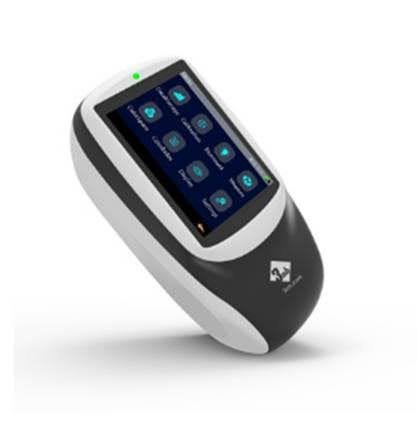
Tackling color and appearance matching challenges across different substrates, 3nh delivers professional color measurement solutions.
Advanced Color Management for Automotive Interior & Exterior
3nh’s industry-leading color management solutions ensure automotive colors remain accurate and consistent in exhibition halls, perfectly aligning with the original design concept.
At present, many enterprises are trapped in severe financial difficulties, casting a somber mood over the automotive industry. Embracing emerging mobility trends such as autonomous driving, micromobility and electric vehicles, leading fashion trends through high-tech design, painting and coating has become a key pillar for the industry to stabilize and recover. To emerge from hardships and turn risks into opportunities, automakers urgently need sophisticated tools to achieve efficient production across global supply chains.
Color and appearance are core selling points of automobiles, making automotive color measurement instruments an indispensable part of the vehicle production process. Only advanced automotive color measurement tools can help manufacturers meet customers’ high-standard requirements for automotive surface effects and design. From laboratories and suppliers to painting workshops and assembly lines, 3nh’s innovative solution portfolio enables meticulous control over every aspect of color and appearance.
Automotive surface color measurement and color management mainly target solid paint, metallic paint, pearlescent paint and chameleon paint for vehicle bodies and exterior parts. It adopts multi-angle spectrophotometry to quantify goniochromism (color change with viewing angle), and realizes digital standard unification and full-process quality control. It ensures consistent color matching for body sheet metal, bumpers, rearview mirrors and plastic parts across different materials, production batches and manufacturers.
Characteristics & Measurement Difficulties of Automotive Paint
- Solid Paint: Uniform color, measurable with single geometric angle.
- Metallic / Pearlescent Paint: Contains aluminum powder/mica flakes with obvious goniochromism. Key viewing angles: 15° (near specular, bright & high chroma), 45° (main tone), 75°/110° (flop angle, dark & grayish).
- Chameleon Paint: Complete hue shift with angle change, requiring 12-angle measurement.
Key Measurement Technology & Instruments
Color Space & Tolerance
Adopt CIE Lab color space*:
- L* : Lightness
- a* : Red-Green axis
- b* : Yellow-Blue axis
- ΔE: Total color difference
o ΔE ≤1.0 : Almost invisible to human eyes (OEM premium standard)
o ΔE ≤1.5 : Automotive industry qualified standard
o ΔE ≥2.0 : Obvious color difference (unqualified)
Professional Instruments
- Multi-angle Spectrophotometer: 5/6 angles for metallic/pearlescent paint; mainstream for auto factory quality control.
- 12-angle Spectrophotometer: For chameleon paint with extreme color flop.
- Light Booth: Equipped with D65, A, CWF, UV standard light sources for visual color evaluation.
Special Effect Parameters
- FI (Flop Index)
- SG (Sparkle Grain)
- CV (Color Vividness)
Full-Process Automotive Color Management
Color Design & Standard Setting
Establish digital color standards via spectral data, Lab* values and effect parameters; unify electronic color standards for global suppliers.
Production & In-line Quality Control
Real-time color testing on body production lines; color matching inspection for bumpers, mirror shells and plastic exterior parts; strict control of metamerism index (MI) to avoid metamerism between metal and plastic parts.
Aftermarket Refinish & Repair
Clean the surface → measure original factory paint → calculate color difference → adjust refinish formula → re-measure multi-points, control ΔE within 1.5 for invisible repair.
Industry Standards
- DIN 6175-2: Automotive coating color tolerance
- SAE J361: Automotive visual color evaluation specification
Common Challenges & Solutions
- Color difference between steel body and plastic bumper: Control via multi-angle matching, metamerism management and exclusive plastic coating formula.
- Batch-to-batch color deviation: Adopt digital color standard, cloud data collaboration and first-article inspection per batch.
- Dull/offset color after repair: Match color accurately + consistent 60° gloss level.
3nh Automotive Surface Color Measurement and Color Management
3nh delivers precise, digital color control for automotive OEM, parts manufacturing, and refinish—mastering metallic, pearlescent, and special-effect paints with multi-angle spectrophotometry and full-lifecycle color management.
Core Challenges in Automotive Color
- Goniochromism (Color Flop): Metallic/pearlescent paints shift in lightness, hue, and sparkle with viewing angle.
- Material Mismatch: Color inconsistency between metal body, plastic bumpers, and interior parts.
- Metamerism: Colors match under daylight but differ under store/shop lighting.
- Batch Variation: Maintaining global color consistency across factories and suppliers.
3nh Key Instruments for Automotive Color
Multi-Angle Spectrophotometers (MS30 Series)
- MS3005 (5 angles): 15°/25°/45°/75°/110° — standard for metallic/pearlescent OEM & QC.
- MS3006 (6 angles): Adds angle for enhanced effect control.
- MS3008 (8 angles): High-resolution flop analysis.
- MS3012 (12 angles): For chameleon/extreme-effect paints.
Key Features:
- 256-pixel dual-array CMOS sensor
- Measures *Lab, ΔE, FI (Flop Index), SG (Sparkle), CV (Color Vividness)
- Conforms to SAE J1545, ASTM D2244, DIN 6175
- Bluetooth, data storage, CxF/QTX digital standard support
Portable & Entry Solutions
- QS4500 (Car Paint Colorimeter): 45/0 geometry for solid-color refinish & quick check.
- TS7700 Benchtop Spectrophotometer: Lab/formulation grade for interiors & plastics.
Color Management Software
- 3nh Color Matching Software: Formulation, quality control, cloud data sharing.
- PeColor AI: Smart paint mixing for auto refinish & plastics.
- Standard Light Booths (P60+): D65, A, CWF, UV for visual evaluation.
Full-Process 3nh Color Management
1. Color Design & Standardization
- Capture standard colors with MS3012/MS3005.
- Build digital color standards (spectral + multi-angle Lab* + effect data).
- Distribute electronic standards globally to eliminate physical sample errors.
2. OEM Production & Quality Control
- Body Line: In-line multi-angle measurement; real-time paint adjustment.
- Parts Manufacturing: Check bumpers, mirrors, pillars; control ΔE ≤ 1.0–1.5.
- Assembly: Verify body–parts matching under standard light; control metamerism.
3. Aftermarket Refinish (Body Shops)
- Clean and prepare surface
- Measure original paint with MS3005/QS4500
- Get AI formula via PeColor
- Spray, measure, adjust; ensure ΔE ≤ 1.5
4. Performance & Standards
- ΔE ≤ 0.5 (typical repeatability)
- Inter-instrument agreement (IIA): ≤ 0.3 ΔE
- Complies with automotive standards: SAE J361, DIN 6175-2, ISO 11664-4
5. Why 3nh for Automotive?
To achieve precise and repeatable color results, 3nh automotive color measurement tools can:
- Define colors with physical and digital color standards;
- Adopt 3D virtual design technology to ensure optical properties fully match actual substrates;
- Characterize color, sparkle and graininess via lightweight devices for tight and narrow joint measurement;
- Conduct quality control with QC software to bridge the gap between design and finished products.
Integrating over 20 years of innovation and profound expertise in color control, 3nh solutions deliver consistent color harmony across all automotive components, from bumpers and fuel tank caps to door handles and car seats.
- Full Effect Coverage: 3–12 angles for all paint types.
- High Precision: Meets OEM tolerances; small instrument error.
- Cost-Effective: Professional performance vs. imported brands.
- End-to-End: Instruments + software + service for design to repair.
3nh enables automotive brands to achieve visual harmony, brand consistency, and zero-defect color quality across the entire vehicle ecosystem.
car manufacturers
Creating high-tech automotive interiors and exteriors that combine aesthetics, comfort, and functionality is no easy feat. However, with the right color measurement solutions, automakers can have complete control over color, making no mistakes.
Car Designer
Whether designing body panels, accessories, or new coating systems, color development is a crucial part of the design process. From concept design to prototype design to finished product, colorimetric measurements ensure color consistency throughout.
Color compatibility and acceptability between vehicles are crucial during assembly. Employing a precise color plan to specify, communicate, and review colors is key to ensuring color harmony and reducing defects.
About The Threenh Technology
Welcome to 3nh (Threenh Technology) — Your Global Partner for Precision Color Measurement & Complete Color Management Solutions.
Who We Are
Shenzhen Threenh Technology Co., Ltd. (3nh) is a national high-tech enterprise and a leading innovator in color measurement, optical testing, and appearance quality control3nh. Founded in 1998 (originally as TILO Technology), we have 28+ years of dedicated R&D and manufacturing expertise3nh.Brands: 3nh, TILO (standard light sources), Sine Image (image test charts), SINESPEC (hyperspectral imaging).Global Footprint: Trusted by 50,000+ users across 140+ countries, with ISO9001, CE, FCC, RoHS certifications.Core Strength: Full in-house R&D, production, and global service — delivering industrial-grade accuracy at competitive cost.
What We Do
We provide full-stack color management equipment & software for precise color specification, quality control, and brand consistency3nh.
1. Color Measurement Instruments (Flagship Lines)
Spectrophotometers (TS/YS/NS/ST Series)
High-precision grating spectrophotometers for Lab, ΔE, spectral data, metamerism testing*. Portable & benchtop models; ideal for textile, plastic, paint, printing, automotive, cosmetics.
- Colorimeters (NH/NR Series)
Handheld, economical, easy to use colormeter — for fast pass/fail QC on production lines.
- Smart Portable Color Tools (Colorimeter MAX)
Pocket-sized, Bluetooth-connected, mobile-app integrated — on-the-go color capture & matching3nh.
- Standard Light Boxes (TILO Brand)
D65, TL84, UV, F, CWF — visual color assessment & metamerism check under industry-standard illuminants.
Gloss Meters, Haze Meters, Image Test Solutions
Complete appearance quality testing for surface finish, transparency, and optical image validation.
2. Color Management Software
- Color QC & Data Analysis Software
- Store standards, compare batches, generate reports, track ΔE tolerance.
- Mobile & Cloud Color Systems
- Real-time data sharing, remote QC, cross-factory color consistency.
Key Advantages for Global Buyers
✅ Industrial Precision: Reproducibility ΔE*ab ≤ 0.06; long-term stability.
✅ Global Compatibility: CIE, ISO, GB standards; 41+ light sources, 8+ color-difference formulas.
✅ Cost-Effective: Premium performance vs. imported brands — lower total cost of ownership.
✅ Custom & OEM: Flexible customization, fast lead times, strong after-sales support.
✅ Textile & Fabric Expertise: Optimized for yarn, woven, knitted, printed, dyed materials — your exact request for fabric color specs.
Industries We Serve
- Textile & Apparel (fabric color matching, dyeing QC, fastness testing)
- Plastics & Packaging
- Paint, Coatings & Ink
- Printing & Paper
- Automotive & Leather
- Cosmetics & Food
- Electronics & Ceramics
- Laboratories & Research
Why Choose 3nh (threenh.com)?
We turn color specifications into measurable, repeatable quality — helping you reduce rejects, ensure batch consistency, and protect your brand’s color identity worldwide.
Visit: www.threenh.com | Email: service@3nh.com | Tel:
+86-755-26508999
— Precision Color, Trusted Globally.
FAQ ABOUT 3NH COLORIMETER
Should I choose 3nh for automotive interior trim color matching?
Absolutely yes — 3nh is a cost-effective, professional and fully capable choice for automotive interior & exterior trim color matching.
Why 3nh is worthy of your choice
Full adaptation to automotive interior materials
Perfect for plastic, leather, fabric, metal, textured trim, piano black and soft-touch parts; solves color deviation & metamerism between different substrates.
Professional measurement for special effects
Supports Lab, ΔE, gloss, sparkle, graininess* testing; fits solid color, metallic and matte interior parts perfectly.
Full-process color management
Covers R&D lab → supplier incoming inspection → production workshop → finished goods QC; unifies color standards across your whole supply chain.
Automotive industry standard compliant
Conforms to SAE, DIN, ISO automotive color tolerance standards; stable inter-instrument agreement(IIA),consistent data among factories.
Big cost advantage vs. imported brands
Similar professional performance to X-Rite but with much lower cost, better local after-sales and faster technical support.
Who should choose 3nh
- Automobile OEMs & auto parts manufacturers
- Interior leather/plastic/trim suppliers
- Automotive coating and paint formula factories
- Quality control teams needing unified global color standards
Why is automotive color measurement more difficult than general industry?
Automotive paints include metallic, pearlescent and chameleon effect coatings with obvious goniochromism (color changes with viewing angle). Besides color difference, it also needs to test sparkle, graininess and flop effect. Meanwhile, different substrates (metal sheet, plastic, leather, fabric) bring challenges for consistent color matching.
Why can’t a standard single-angle colorimeter work for car paint?
Single-angle devices only test solid flat colors. They cannot capture angle-based color change of metallic/pearlescent paint. Automotive OEM and tier suppliers must use multi-angle spectrophotometers (5/6/12 angles) for accurate measurement.
What color parameters need to be controlled for automotive exterior & interior parts?
- Basic: Lab, ΔE total color difference*
- Effect: Flop Index, Sparkle Grain, graininess
- Auxiliary: Gloss, metamerism index MI
What is the acceptable ΔE tolerance for automotive industry?
- Premium OEM: ΔE ≤ 1.0
- Standard auto parts: ΔE ≤ 1.5
- Aftermarket refinish: ΔE ≤ 2.0
Why do bumper, mirror and car body have color difference?
Different substrates (steel vs plastic), coating thickness, paint formula and aluminum powder arrangement cause deviation. It requires multi-angle color matching + metamerism control to unify color.
What instruments does automotive color management need?
- Multi-angle spectrophotometer: for metallic/pearlescent exterior paint
- Portable colorimeter: for solid color and incoming QC
- Benchtop spectrophotometer: for lab formula and interior material testing
- Standard light booth: for visual color assessment under standard light sources
- Color management software: for data storage, comparison and batch control
What is metamerism in automotive color?
Two parts look the same under daylight but different under indoor/LED light. Professional color measurement must control metamerism index to avoid visual color mismatch in different lighting environments.
Can 3nh instruments replace imported brands for automotive color control?
Yes. 3nh multi-angle spectrophotometers fully meet SAE, DIN, ISO automotive standards, with stable inter-instrument agreement (IIA), complete data output, and much better cost performance and local after-sales service.
Which automotive parts need color measurement?
Car body, bumper, rearview mirror, fuel cap, door handle, dashboard, leather seat, fabric interior, plastic trim, wheel hub and coating parts.
What is the full-process automotive color management flow?
Color standard definition → Lab formula confirmation → Supplier incoming inspection → Production line online testing → Finished product inspection → Batch data archive & traceability.
Source: FG Newswire