As businesses and technologies evolve, so does the complexity of the systems we need to monitor. The volume of data generated by infrastructure, applications, and microservices has surged, making it more crucial than ever to have robust, efficient, and scalable monitoring solutions. Time series data such as system metrics, logs, and performance indicators has become one of the most significant types of data to monitor, and time series databases (TSDBs) are at the heart of it all.
Open-source time series databases (OSTSDBs) have gained significant popularity in recent years due to their flexibility, cost-effectiveness, and community-driven innovation. Among these, VictoriaMetrics stands out as a leading open-source time series database that businesses are increasingly adopting for their monitoring needs. In this article, we will explore why open-source time series databases are the future of monitoring, the benefits of using them, and why VictoriaMetrics is the preferred solution for businesses looking to embrace open-source monitoring.
The Rising Popularity of Open-Source Time Series Databases
The growth of open-source time series databases can be attributed to several factors that make them ideal for modern monitoring solutions:
1. Cost Efficiency
One of the most compelling reasons for the rise of open-source time series databases is their cost-effectiveness. Unlike proprietary solutions that come with expensive licensing fees and hidden costs, open-source databases like VictoriaMetrics are free to use and deploy, allowing businesses to save significantly on software costs. For companies with large-scale infrastructure, the cost savings can be substantial, especially as they scale their monitoring systems over time.
Moreover, open-source time series databases often have lower operational costs compared to traditional databases, as they are optimized for high-performance data ingestion and storage. Features such as advanced data compression help reduce storage costs, making them an attractive option for businesses looking to maintain high levels of performance without breaking the bank.
2. Flexibility and Customization
Open-source databases provide flexibility and customization that proprietary solutions cannot match. Developers have full access to the source code, enabling them to modify and extend the functionality of the database according to specific business needs. This ability to customize ensures that businesses can tailor their monitoring solutions to fit unique requirements, whether it’s for handling specific data types, integrating with other tools, or adapting to specific workflows.
For example, with VictoriaMetrics, businesses can modify the database to work with their existing infrastructure, integrate it with tools like Prometheus for metrics collection, and use Grafana for data visualization. This level of customization makes open-source time series databases highly versatile and adaptable for a wide range of use cases.
3. Community-Driven Innovation
The open-source nature of these databases fosters a vibrant community of developers, engineers, and users who contribute to their continuous improvement. Features are regularly updated, bugs are quickly identified and fixed, and new integrations and tools are constantly being developed by the community. This community-driven approach ensures that the database stays up-to-date with the latest technology trends and best practices in monitoring and observability.
For businesses, this means access to a wealth of shared knowledge, resources, and support, making it easier to implement and maintain their monitoring solutions. The active community around VictoriaMetrics, for instance, offers valuable resources like documentation, case studies, and forums where users can discuss problems and share solutions.
4. Avoiding Vendor Lock-In
Vendor lock-in is a significant concern for businesses relying on proprietary monitoring solutions. Open-source time series databases mitigate this issue by offering vendor independence. Since the source code is open, businesses are not tied to a single vendor’s roadmap, pricing structure, or support services. This autonomy allows companies to switch vendors, adapt to new technologies, or even self-host their database without being restricted by a proprietary solution’s limitations.
For businesses that value control over their infrastructure and data, this level of freedom is a major benefit. Open-source solutions like VictoriaMetrics ensure that businesses can evolve their monitoring systems on their own terms.
The Benefits of Open-Source Time Series Databases
The advantages of open-source time series databases go beyond cost and flexibility. Here are some key benefits that make them a preferred choice for modern monitoring:
1. Scalability for Large-Scale Environments
Open-source time series databases, especially those built for high performance, are designed to scale horizontally. This scalability is essential for businesses that are expanding or running large, distributed systems. For example, VictoriaMetrics is capable of handling billions of data points per second, making it an ideal choice for businesses with massive data ingestion needs, such as cloud providers, telecom companies, and e-commerce platforms.
As businesses grow, so does the volume of time-series data generated by their systems. VictoriaMetrics’ ability to scale ensures that companies can continue to monitor and analyze data efficiently, without encountering performance bottlenecks. With horizontal scaling, you can simply add more nodes to distribute the load and keep your system running smoothly.
2. High-Performance Querying
For effective monitoring, not only must the database handle large volumes of data, but it must also support fast querying to deliver real-time insights. Open-source time series databases like VictoriaMetrics excel in this area by offering a query engine optimized for speed and efficiency. VictoriaMetrics enables users to run complex queries on vast amounts of time-series data in a fraction of the time it would take using traditional databases.
The ability to retrieve data in real time is crucial for businesses that need to act quickly on performance issues, security breaches, or system failures. With VictoriaMetrics, businesses can query massive datasets with low latency and gain insights into their infrastructure’s health in seconds.
3. Advanced Data Compression
Time-series data can take up significant storage space, especially when dealing with large-scale environments. Open-source databases like VictoriaMetrics employ advanced data compression techniques that significantly reduce storage requirements while maintaining high performance. This is especially beneficial for businesses with long-term data retention needs, as it ensures that time-series data can be stored for extended periods without incurring high storage costs.
For instance, VictoriaMetrics’ ability to compress time-series data by over 90% helps businesses minimize storage costs and avoid over-provisioning infrastructure.
4. Integration with Existing Tools
Open-source time series databases are often designed with easy integration in mind, ensuring that businesses can connect them to their existing monitoring, alerting, and visualization tools. VictoriaMetrics, for example, integrates seamlessly with Prometheus, Grafana, and OpenTelemetry, allowing businesses to extend their observability capabilities and leverage powerful analytics features.
These integrations make it easy for DevOps teams to continue using the tools they are familiar with while benefiting from the performance and scalability of open-source databases. This plug-and-play approach saves businesses the hassle of having to build custom integrations or switch to a proprietary system.
Why VictoriaMetrics Is the Preferred Open-Source Time Series Database
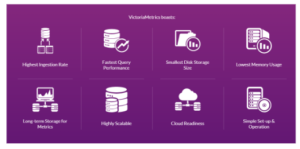
While there are several open-source time series databases available, VictoriaMetrics stands out as one of the most powerful and efficient solutions for modern monitoring. Here’s why businesses are increasingly adopting VictoriaMetrics:
1. High Throughput and Scalability
VictoriaMetrics is built for high throughput, capable of handling millions of time-series data points per second. Whether you’re monitoring cloud-native applications, microservices, or hybrid environments, VictoriaMetrics can scale with your needs. Its horizontal scalability ensures that as your data grows, the system can scale effortlessly without performance degradation.
2. Cost-Efficiency
VictoriaMetrics offers a cost-effective solution for monitoring large-scale systems. With its excellent data compression and efficient querying capabilities, VictoriaMetrics reduces storage costs and resource consumption, helping businesses optimize their infrastructure expenses.
3. Seamless Integration with Prometheus and Grafana
For businesses already using Prometheus for time-series data collection, VictoriaMetrics provides an easy-to-integrate remote storage backend. This allows businesses to offload their data from Prometheus to VictoriaMetrics for long-term storage without sacrificing performance. Coupled with Grafana for data visualization, VictoriaMetrics offers a complete monitoring stack that enables businesses to track metrics, analyze trends, and set up real-time alerts.
4. Active Community and Ongoing Development
As an open-source solution, VictoriaMetrics benefits from a thriving community of developers, contributors, and users. This community-driven approach ensures that the database is continuously improved, with regular updates, bug fixes, and new features. The open nature of the project gives businesses full control over the database and ensures they stay ahead of industry trends.
5. Simplified Management and Deployment
VictoriaMetrics is designed to be easy to manage and deploy, whether you are running it on-premise or in the cloud. With its simple setup process, auto-scaling capabilities, and integration with Kubernetes and Docker, businesses can quickly deploy VictoriaMetrics without extensive configuration or manual intervention.
Use Cases of VictoriaMetrics in Business
VictoriaMetrics is used across various industries to monitor cloud infrastructures, IoT devices, network performance, and more. Some common use cases include:
- Cloud Infrastructure Monitoring: Enterprises with multi-cloud environments use VictoriaMetrics to monitor cloud resources such as virtual machines, containers, and services.
- Application Performance Monitoring: Development teams use VictoriaMetrics to monitor the health and performance of applications and microservices, enabling proactive issue detection.
- IoT Monitoring: Businesses in industries like manufacturing and transportation use VictoriaMetrics to collect and analyze time-series data from IoT devices, ensuring smooth operation and identifying faults early.
- Network Monitoring: VictoriaMetrics is used by telecommunications companies to track network traffic, detect outages, and ensure optimal performance.
Conclusion
Open-source time series databases are rapidly becoming the future of monitoring due to their flexibility, cost-effectiveness, and scalability. As more businesses look to manage the increasing volume of time-series data generated by their systems, tools like VictoriaMetrics offer a powerful, open-source solution that is optimized for performance, cost-efficiency, and ease of use.
VictoriaMetrics stands out as a preferred choice for businesses looking to embrace open-source monitoring, thanks to its ability to handle large-scale systems, integrate seamlessly with popular tools, and provide an exceptional monitoring experience. Whether you’re scaling your infrastructure or looking to optimize your monitoring costs, VictoriaMetrics is the ultimate solution for businesses ready to embrace the future of open-source monitoring.
Source: FG Newswire