This surge in demand for cordless home robotics is driven by the rejection of “friction.” For decades, smart home tech promised automation but delivered a hidden tax of manual oversight. You didn’t just own a device; you owned the maintenance of its power supply and its physical tethers. In 2026, the market has matured. Consumers are no longer comparing raw suction power or technical spec sheets; they are comparing degrees of independence. If a machine requires a human to untangle a hose or uncoil a cable, it is no longer considered autonomous—it is a chore in a different form.
The Behavioral Shift Toward a Zero-Friction Household
The primary driver of the cordless revolution is the psychological value of “absence.” In high-end residential markets, the visual and physical presence of maintenance—hoses draped across limestone, cables snaking through gardens—is increasingly viewed as an aesthetic failure. The modern homeowner demands a property that maintains itself in the background, out of sight and out of mind.
This behavioral shift has forced a massive pivot in hardware engineering. To meet the zero-friction mandate, robotics must carry their own power and their own navigational “intelligence” entirely on the edge. The cord was once a safety net for limited battery life; today, it is seen as a bottleneck that prevents a device from truly integrating into the home’s architecture. As battery density has finally caught up with domestic power demands, the market is aggressively rewarding platforms that allow the human element to be deleted from the operational loop entirely.
Why the Concept of a Self-Cleaning Pool is Driving Property Value
Nowhere is this behavioral change more visible than in the outdoor living sector. Historically, pool maintenance was the final frontier of manual domestic labor. Even “automated” systems of the past were notoriously high-friction, requiring bulky suction hoses that cluttered the deck and placed a massive strain on the home’s primary filtration pump. It was a reactive, analog system that felt increasingly out of place in a digitally optimized world.
In 2026, the demand for a self cleaning pool has transitioned from a luxury desire to a baseline real estate requirement. Modern homeowners expect their water features to function like a self-sustaining utility. They want the water to be pristine, the chemicals to be balanced, and the surfaces to be scrubbed without ever seeing the equipment responsible for the result. This shift has turned the pool from a high-maintenance liability into a high-performance asset. By removing the physical tether to the pump room, cordless robotics have enabled the pool to maintain its “as-built” perfection every day, rather than once a week during a service visit.
The Economic Logic of Independent Hardware
The transition to cordless home robotics is also a calculated financial decision. For years, residential maintenance was an operational expense (OPEX) problem—you paid for recurring service labor because the hardware wasn’t capable of handling the work alone. In 2026, the financial logic has flipped toward a one-time capital expenditure (CAPEX) on autonomous systems that eliminate the need for those service contracts.
Premium robotic pool cleaners now operate as independent nodes on a property. They don’t rely on the home’s primary hydraulic system, which means they don’t contribute to the wear and tear of expensive, high-voltage pumps. When the hardware is untethered, it performs its task with surgical efficiency, handling the exact physical labor that previously required a manual technician. The ROI is no longer theoretical; it is measured in the total elimination of service invoices and the preservation of the property’s materials.
Why Cordless Robotic Pool Cleaners Represent the New Maturity of Outdoor Tech
As the market consolidates around autonomy, the hardware has undergone a radical transformation. Consumers are no longer impressed by gadgets; they are investing in platforms. The elimination of the cord means the robot must be a fully realized edge-computing device, capable of mapping, sensing, and recovering without any outside help.
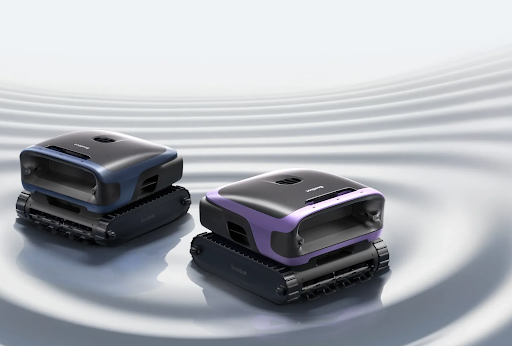
High-performance models, such as the Beatbot Sora 70 In-ground pool cleaner, illustrate how cordless robotic pool cleaners have matured into fully independent cleaning systems. By housing a high-density battery and localized processing within a single chassis, these units manage the dense, high-resistance underwater environment with zero human oversight. They trap debris at the source, preventing it from ever entering the main filtration system. This level of independent operation is the new industry standard. In 2026, if a robotic pool cleaner cannot solve its own navigational problems or manage its own power cycle, it is simply not competitive.
Energy Sovereignty and the Low-Voltage Advantage
The surge in cordless demand is also an environmental statement. Traditional tethered pool cleaners were energy-hungry appendages that required massive, grid-tied AC pumps to run for hours just to generate suction. This was a brute-force approach to a precision problem.
The shift to cordless, battery-operated hardware represents a move toward energy sovereignty. Modern cordless robotic pool cleaners operate on highly efficient, low-voltage DC motors. They draw only a fraction of the electricity required by legacy systems, and because they operate independently, the property’s primary filtration system can run on a much lighter, more sustainable schedule. For the eco-conscious consumer, the absence of the cord is not just about aesthetics—it is about reducing the home’s total energy footprint while elevating its performance.
The Future of the Untethered Home
The rapid proliferation of cordless home robotics is a clear indicator of where residential tech is headed. We have moved past the era of smart devices that merely report data, and entered an age of autonomous hardware that physically manages the environment. As battery technologies continue to refine and spatial mapping becomes even more precise, the physical tether will eventually be viewed with the same curiosity as a rotary phone.
In 2026, autonomy is no longer defined by connectivity. It is defined by independence from it. The home of the future is not just automated; it is engineered to function flawlessly, silently, and entirely off the grid.
Source: FG Newswire