NEW YORK, NY – February 11, 2026 — True Contour issued an industry-focused announcement highlighting observable shifts in professional discussions around non-surgical pain management, as musculoskeletal care frameworks increasingly emphasize tissue condition, structural integrity, and functional support.
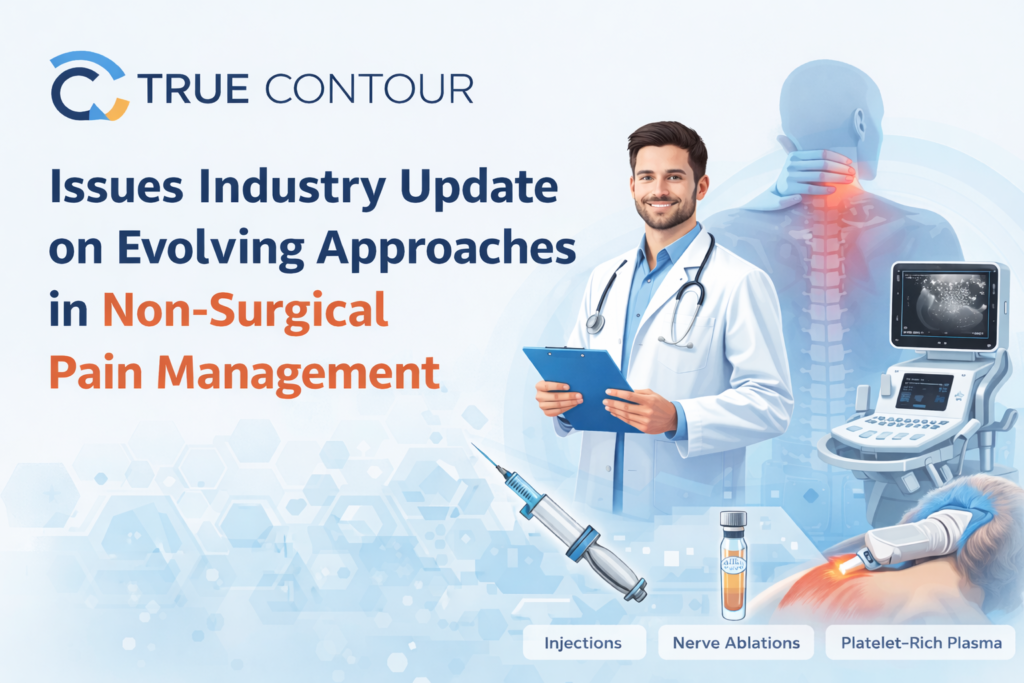
According to the company, clinical and educational discourse across musculoskeletal care settings has expanded beyond symptom-focused approaches, with growing attention placed on biological processes, movement considerations, and long-term functional outcomes. These discussions reflect a broader effort to contextualize pain within structural and functional systems rather than treating it solely as an isolated sensory experience.
Industry dialogue has traditionally emphasized medication-based management, temporary interventions, and surgical procedures when degeneration progresses. However, recent professional conversations increasingly examine biologically oriented approaches that align with natural repair activity in joints, connective tissue, and supporting structures, particularly in non-surgical planning contexts.
Joint-related concerns involving knees, hips, shoulders, and spinal regions frequently appear in these discussions. Regenerative-related applications, including platelet-based and other biologically derived procedures, are referenced in relation to supporting existing tissue processes rather than serving as standalone solutions. These conversations often emphasize pacing, monitoring, and integration with movement-based considerations as part of structured care planning.
Clinical commentary associated with Scottsdale Regenerative Medicine and insights attributed to Dr. G have contributed to broader professional dialogue emphasizing expectation setting and contextual evaluation. In these discussions, regenerative methods are described as components within coordinated care models that account for prior injury history, activity exposure, occupational demands, and movement mechanics.
A parallel shift is also evident in how outcomes are discussed. Mobility patterns, movement tolerance, and functional continuity increasingly appear alongside traditional pain-scale references, reflecting attention to how individuals manage daily activities and mechanical stress over extended periods. These perspectives position non-surgical planning within multidisciplinary models that connect biological considerations with physical conditioning and behavioral factors.
While surgical procedures remain established components of orthopedic and musculoskeletal medicine, industry commentary indicates growing interest in evaluating non-surgical options earlier in care planning, particularly where tissue preservation is a stated consideration. These discussions consistently emphasize patient-specific assessment and clinical evaluation.
Professional discourse also highlights variability in response, the evolving nature of research across certain applications, and the importance of measured interpretation of clinical observations. Regenerative medicine continues to be examined within an environment of ongoing evaluation, practitioner experience, data collection, and patient education.
According to True Contour, the announcement is intended to document broader industry trends rather than promote specific treatments or clinical outcomes.
Additional information about True Contour and its industry communications is available on the company’s website.
About True Contour
True Contour operates within the health and wellness sector, focusing on industry communication related to evolving musculoskeletal care approaches, non-surgical treatment frameworks, and patient-centered planning perspectives. The organization provides informational context surrounding healthcare discussions influencing modern pain management environments.
Media Contact
True Contour
Email: contact@truecontourmedical.com
Website: https://truecontourmedical.com
###