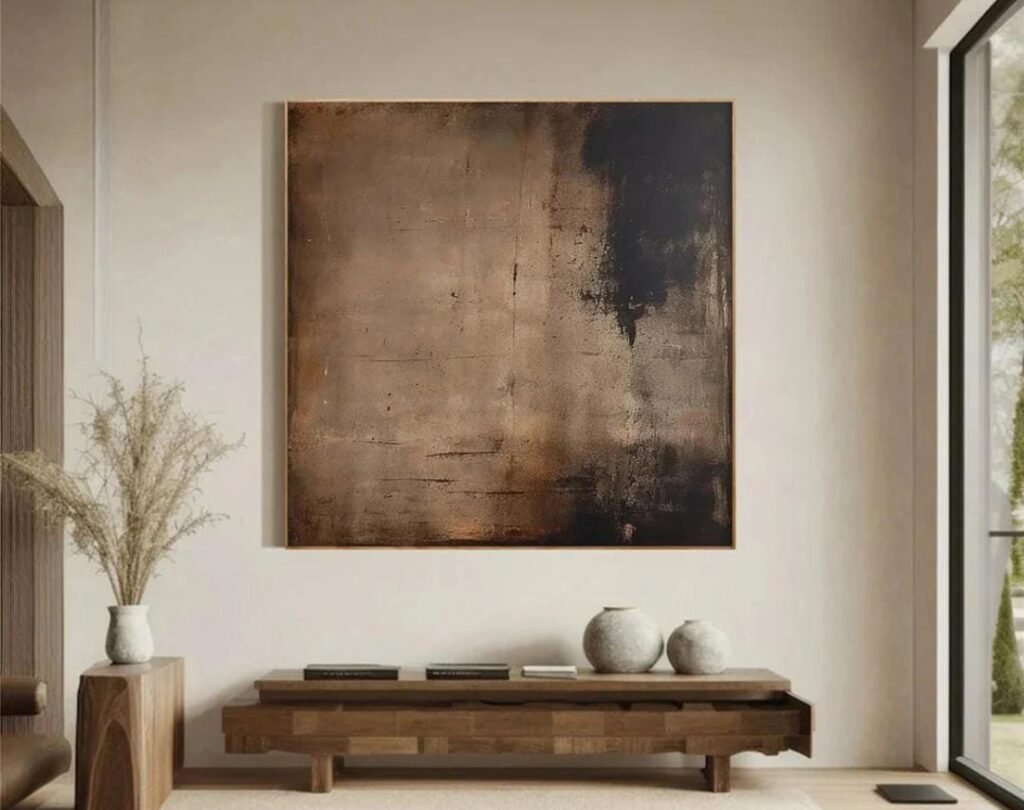
In an increasingly chaotic world, the desire to cultivate personal sanctuaries of calm and peace within our homes has never been stronger. Interior design has shifted from mere decoration to a form of emotional self-care, where every element is chosen for its ability to influence mood and well-being. At the forefront of this movement is a powerful artistic statement: textured abstract wall art. More than just a visual accent, a thoughtfully chosen large abstract wall art piece serves as the soul of a room, transforming empty walls into focal points of serenity and sophistication. When crafted as a hand-painted oil painting on a textured canvas, this art form elevates peaceful modern decor into an immersive, tactile experience that quiets the mind and inspires the spirit.
This comprehensive guide explores why textured abstract art is the quintessential element for calm modern decor, delving into its emotional impact, the unparalleled quality of hand-painted oils, and how to select the perfect piece to create your own personal haven.
The Psychology of Calm: Why Abstract Art Anchors Modern Spaces
Modern life is a sensory overload of sharp lines, digital screens, and constant noise. Calm modern decor acts as an antidote, employing soft colors, organic forms, and minimalist principles to create visual respite. Textured abstract wall art is perfectly suited to this philosophy. Unlike representational art, which directs the mind to identify objects and narratives, abstraction invites a different kind of engagement.
- Non-Literal Interpretation: Free from specific imagery, abstract art allows the viewer to project their own emotions and find personal meaning. A painting with soft, swirling blues and layered white texture might evoke the tranquility of a misty seascape for one person and the quiet of a winter morning for another. This open-endedness prevents mental fatigue and encourages a meditative state.
- Color Theory in Practice: The palette of peaceful modern decor is no accident. Artists creating pieces for this aesthetic masterfully utilize color psychology:
- Earthen Neutrals: Shades of sand, warm grey, and soft clay ground a space, providing a stable, nurturing foundation that reduces anxiety.
- Serene Blues & Greens: Inspired by sky and water, these cool tones are scientifically proven to lower heart rate and blood pressure, promoting deep calm.
- Muted Pastels: Washed-out blush, lavender, and sage add gentle warmth without overstimulation, fostering a sense of softness and comfort.
- The Power of Organic Form: Fluid shapes, gentle gradients, and biomorphic forms mimic patterns found in nature—the curve of a river, the growth rings of wood, the soft contour of a stone. Our brains are hardwired to find these forms soothing, making abstract art with organic composition a direct conduit to relaxation.
The Unmatched Depth of Hand-Painted Oil on Textured Canvas
While prints and digital art have their place, they cannot replicate the soul and sensory depth of an original hand-painted oil painting. The choice of medium and material is fundamental to achieving the desired emotional impact.
The Alchemy of Oil Paint:
Oil paint is a medium of luminosity and time. Its slow drying time allows artists to blend colors seamlessly, creating those ethereal gradients and depth-filled layers that feel atmospheric and boundless. The pigments in high-quality oils possess a richness and vibrancy that flat prints simply cannot emulate, allowing the painting to hold light and change character throughout the day.
Texture as a Narrative:
This is where textured canvas transitions from a surface to a central character. The texture is not merely visual; it is topographic. Artists build the surface using techniques like:
- Impasto: Applying paint thickly with a palette knife, creating bold, expressive ridges that cast dynamic shadows.
- Layering and Scraping: Building up and selectively revealing underlying colors, creating a history and depth that suggests geological strata or weathered surfaces.
- Incorporating Mixed Media: Adding sand, plaster, or fabrics to the gesso to create a granular, highly tactile underbase.
This physical dimension invites touch (even if only imagined) and ensures the artwork is experienced differently from every angle and in every light. A large abstract wall art piece with significant texture becomes a captivating landscape that draws the viewer in, offering a tangible sense of presence and craftsmanship that mass-produced decor lacks.
Selecting Your Centerpiece: A Curator’s Guide
Choosing the right piece is a personal journey. Here is a framework to guide your selection, ensuring your art enhances your calm modern decor and resonates deeply.
- Scale and Proportion: The Rule of Dominance
For a piece to serve as a true focal point, scale is paramount. A large abstract wall art painting should command attention without overwhelming. A general guideline is for the art to occupy 50-75% of the available wall space above a key furniture item (like a sofa or sideboard). Don’t be afraid of a piece that feels bold; in a minimalist room, a substantial painting provides the necessary visual weight and interest. - Color Harmony: Dialogue with Your Space
Your painting should converse with your room, not clash with it. There are two successful approaches:
- Tonal Harmony: Select a piece that works within your existing color scheme, using variations of the room’s main neutrals and accents. This creates a cohesive, fluid look.
- Complementary Accent: Choose art that introduces one or two new, complementary hues. For example, a room of greys and whites can be profoundly elevated by a painting with soft accents of terracotta or ochre, adding warmth and dimension.
- Composition and Energy:
Even within “calm,” there is a spectrum of energy.
- Horizontal Compositions: Promote stability and restfulness, ideal for spaces meant for relaxation like living rooms and bedrooms.
- Vertical Compositions: Suggest uplift and gentle aspiration, wonderful for entryways or studies.
- Centered vs. Asymmetrical: A balanced, centered composition feels meditative and orderly. An asymmetrical composition with flowing forms feels more dynamic and organic.
- Authenticity and Connection:
Ultimately, the most important factor is your emotional response. Does the painting make you pause? Does it evoke a feeling of peace or curiosity? Invest in art that you connect with on a level beyond mere decoration. An original hand-painted oil painting is a unique object with the artist’s energy imbued in every stroke; it tells a story that you become part of.
Integrating Art into Your Calm Modern Decor
Placement and styling are the final, crucial steps. Let the art breathe by avoiding clutter on the surrounding walls. Illuminate it with a dedicated picture light or well-placed track lighting to highlight its texture at night. Frame it simply, if at all—a slim, neutral floating frame or no frame for a truly contemporary look—so nothing distracts from the work itself. Style the adjacent surfaces minimally: a single sculptural vase, a stack of elegant books, or a slender floor plant can complement without competing.
Questions & Answers
Q1: What defines “calm modern decor” and how does wall art contribute to it?
A1: Calm modern decor is an interior design philosophy prioritizing serenity, minimalism, and organic harmony. It uses muted color palettes, clean lines, and natural materials to create restorative spaces. Textured abstract wall art is a cornerstone of this style, serving as a non-literal, emotionally evocative focal point that reduces visual noise and introduces soothing color and form.
Q2: Why is hand-painted abstract art considered superior to mass-produced prints for interior design?
A2: A hand-painted oil painting offers irreplicable depth, luminosity, and physical texture. Each piece is unique, carrying the artist’s intention in every brushstroke. The tactile textured canvas and rich layers of oil paint create a dynamic presence that interacts with light, offering an authentic soul and craftsmanship that flat, identical prints cannot provide.
Q3: How does the texture in abstract canvas art enhance a room’s ambiance?
A3: Texture adds a vital tactile and visual dimension. It creates movement through light and shadow, making the artwork change throughout the day. This depth draws the viewer in, fosters engagement, and adds a layer of sophisticated, sensory interest that elevates a room from simply looking decorated to feeling curated and immersive.
Q4: What are the best color palettes for abstract art intended to create a peaceful bedroom environment?
A4: For a peaceful bedroom, seek abstract art with palettes of soft, earthen neutrals (warm greys, beiges), serene blues and greens (dusty teal, sage), and muted pastels (lavender, blush). These colors, derived from nature, are psychologically proven to lower stress and promote relaxation, making them ideal for a restful sanctuary.
Q5: What should I consider regarding size when choosing large wall art for my living room?
A5: Scale is critical. The artwork should be proportional to your wall and key furniture. A general rule is that a large abstract wall art piece above a sofa should span approximately two-thirds of the sofa’s width. This creates a balanced, anchored look where the art acts as a confident focal point without overwhelming the space.
Q6: How do I choose between a horizontal or vertical abstract painting composition?
A6: Choose based on the wall space and desired energy. Horizontal compositions promote stability and restfulness, ideal over wide furniture. Vertical compositions suggest uplift and work well in narrower spaces like between windows or in entryways. The flow of the forms within the painting should also guide your choice.
Q7: Can textured abstract art work in a minimalist, sparse room?
A7: Absolutely. In fact, it’s a perfect pairing. A minimalist room provides a quiet backdrop that allows the complexity, color, and texture of a hand-painted oil painting to truly shine as the singular, powerful statement. The art provides the necessary visual interest and organic softness that prevents minimalism from feeling sterile.
Q8: What’s the difference between gallery-wrapped canvas and framed canvas for modern decor?
A8: A gallery-wrapped canvas has the image continuing around the deep sides of the wooden stretcher bar, presenting a clean, finished look without a frame. This is ideal for a sleek, contemporary aesthetic. A framed canvas can add a finishing accent; for modern decor, choose a slim, flat profile frame in a neutral tone like matte black, natural wood, or white.
Q9: How do I care for and clean a textured oil painting?
A9: Dust very gently and infrequently with a clean, soft, dry brush (like a makeup brush) held at an angle, lightly skimming the surface. Never use water, solvents, or commercial cleaners. Avoid direct sunlight and extreme humidity. For significant issues, always consult a professional art conservator.
Q10: Is investing in original abstract art worth it compared to buying affordable prints?
A10: Investing in original art is investing in uniqueness, artistic integrity, and sensory quality. An original hand-painted oil painting is a one-of-a-kind object that adds unparalleled depth and value to your home. While prints are accessible, they lack the texture, luminosity, and soul that define a transformative piece of peaceful modern decor.
Conclusion: Transform Your Space with Iris Lee Gallery
Creating a home that serves as a sanctuary is one of the most rewarding endeavors. It requires curating elements that speak not just to style, but to emotion and well-being. Textured abstract wall art, particularly in the form of large, hand-painted oil paintings on canvas, stands as the most powerful tool to achieve this goal. It merges the calming principles of color psychology, the immersive quality of tactile texture, and the profound beauty of authentic artistry.
For those seeking to embark on this transformative journey, the curated collections at Iris Lee Gallery offer a destination of discovery. Specializing in original works that embody the essence of calm modern decor, the gallery connects art lovers with pieces that are not merely decorations, but emotional anchors for the home. Explore their portfolio to find that singular statement piece—a work of art that resonates with your spirit and transforms your space into a true personal haven.
Discover a collection designed to inspire calm and modern sophistication at Iris Lee Gallery.
Source: FG Newswire