Walk around any growing Indian city today and it becomes clear that facades are changing. They look cleaner, sharper, and far more contemporary. Behind many of these sleek exteriors sits a material that architects and builders have quietly begun to rely on more than ever.
Yes, the material being discussed is aluminium composite sheets.
Construction has never been known as the most environmentally friendly industry. Cement, steel, and traditional cladding systems consume enormous energy and resources. Over the last decade, however, the conversation has started shifting. Developers increasingly want materials that perform well while reducing environmental impact across the lifecycle of a building.
This is exactly where aluminium composite sheets enter the picture. They combine durability, lightweight engineering, recyclability, and design flexibility in a way that many conventional cladding systems struggle to match.
Across the industry, architects, fabricators, and developers have been steadily moving toward this solution not only for aesthetics but also because it makes technical and environmental sense.
The Rise of Aluminium Composite Sheets in Modern Construction
A decade ago, exterior cladding decisions were usually limited to stone, glass, plaster systems, or ceramic tiles. These materials still exist, but they often come with structural and maintenance challenges.
This is where aluminium composite sheets began changing the equation.
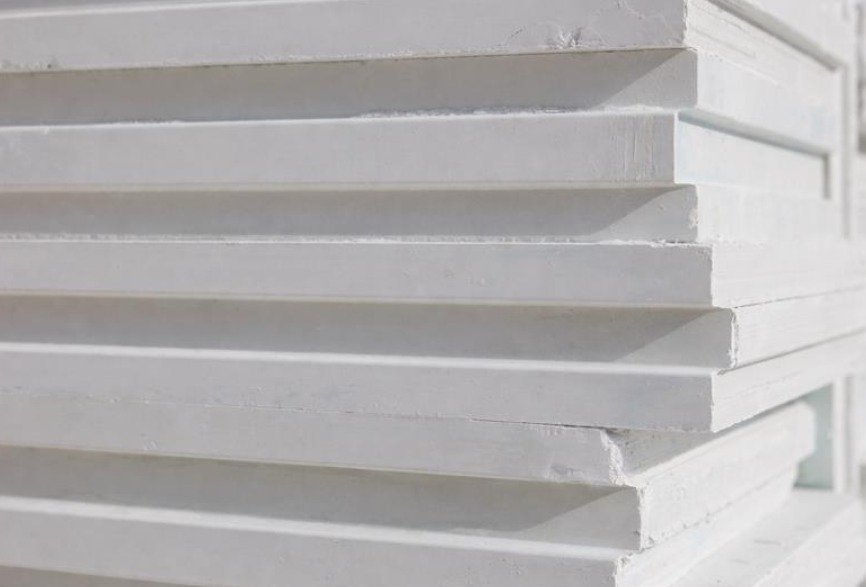
Structurally, these panels consist of two aluminium skins bonded to a mineral-filled or polyethylene core. Depending on the application, the total thickness typically ranges between 3 mm and 6 mm. In premium architectural products, the top aluminium skin is generally around 0.5 mm thick, creating a strong yet lightweight configuration.
Weight is one of their biggest advantages.
A standard panel typically weighs between 5.5 and 7.5 kg per square metre depending on configuration. Compare that with natural stone, which can exceed 50 kg per square metre. The difference directly impacts structural load, installation complexity, and transport efficiency.
Architects often note that choosing the right ACP board allows them to reduce substructure requirements. Less supporting framework means lower material consumption and more efficient construction.
Durability is another major factor. Modern aluminium composite sheets are coated with PVDF or FEVE paints that offer excellent resistance to UV radiation and environmental exposure. When manufactured properly, these coatings can maintain colour stability for 15 to 20 years.
This translates into fewer repainting cycles, reduced maintenance requirements, and lower material waste over time.
Why Aluminium Composite Sheets Fit the Sustainability Conversation
When people discuss sustainable construction materials, bamboo or recycled wood often come to mind. While those materials have their place, sustainability is not only about where a material comes from. It is about the entire lifecycle of a product.
Resource Efficiency and Recyclability
Aluminium is one of the most recyclable industrial metals in the world. Nearly 75 percent of all aluminium ever produced is still in circulation through recycling.
The aluminium skins used in aluminium composite sheets can be recycled at the end of their lifecycle. Even fabrication waste generated during panel cutting can often re-enter recycling streams.
When fabricators cut an ACP board, leftover pieces do not necessarily become landfill waste. Instead, they can be recycled and reused within the aluminium supply chain.
Another advantage is energy efficiency. Recycling aluminium requires only about 5 percent of the energy needed to produce primary aluminium. This dramatically reduces the environmental footprint compared to producing new material.
Longevity and Reduced Maintenance
Another key sustainability factor is lifespan.
A facade that requires frequent repair or repainting inevitably consumes more materials over time. High-quality aluminium composite sheets help reduce this cycle.
PVDF-coated surfaces resist corrosion, UV degradation, and atmospheric pollutants. When properly installed, they maintain structural integrity and visual appearance for decades.
Industry experience shows that projects using a well-manufactured ACP board often maintain facade performance for 20 years or more with minimal maintenance.
Less maintenance means fewer resources consumed across the building lifecycle and fewer operational challenges for facility managers.
Performance and Safety: A Critical Reason for the Shift
While sustainability is important, safety and performance remain the top priorities in construction.
Fire Safety in Facade Materials
Fire safety regulations have become increasingly stringent in recent years, particularly for high-rise buildings.
In India, the National Building Code highlights the importance of fire-resistant cladding systems. This has led to wider adoption of fire-retardant variants of aluminium composite sheets.
In these panels, the conventional polyethylene core is replaced with a mineral-filled fire-resistant core. The mineral content helps restrict flame spread and reduces heat release during fire exposure.
Depending on formulation and certification, these systems can achieve classifications such as B-s1, d0 and A2-s1, d0 under EN 13501-1 testing standards.
Selecting a certified ACP board with fire-retardant or fire-resistant properties makes it far more suitable for commercial towers, hospitals, airports, and institutional buildings.
Design Freedom with Modern Facade Panels
Beyond performance, aluminium composite sheets offer something architects deeply value: design flexibility.
Traditional cladding materials often limit creativity. Stone cannot be bent. Ceramic panels have dimensional restrictions. Glass introduces additional structural complexity.
A well-fabricated ACP board can be routed, bent, folded, curved, or perforated to create cassette systems, curved facades, and intricate architectural patterns.
This flexibility allows architects to experiment with bold forms while maintaining a lightweight facade system.
Another advantage is finish consistency. Natural materials often vary in colour and grain, which can complicate large installations. Factory-coated panels ensure uniform appearance across large surfaces.
The Growing Role of Aluminium Composite Sheets
The construction industry rarely changes overnight. Materials evolve gradually as architects, engineers, and developers gain confidence in their performance and lifecycle benefits.
But the shift toward aluminium composite sheets is clearly visible today.
They offer a unique balance of lightweight engineering, durability, recyclability, and design freedom. When manufactured responsibly and installed correctly, they support both architectural ambition and sustainability goals.
From commercial towers to retail facades and infrastructure projects, the adoption of the ACP board continues to grow.
And industry experience suggests that once project teams work with a well-engineered ACP board system, they rarely return to older cladding methods—because the smartest construction solutions are often the ones that quietly solve multiple challenges at once.
Source: FG Newswire