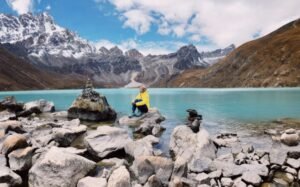
The Everest Three Pass Trek is considered to be one of the toughest and most incredible trekking routes in Nepal. It provides spectacular panoramic sceneries of the tallest mountain ranges in the world, passing across rough grounds and varied landscapes.
This expedition has three tough high passes, which are Kongma La (5,535 meters), Cho La (5,420 meters), and Renjo La (5,360 meters). These passes are non-technical except Cho La, which requires microspikes in icy conditions.
The most important question among the adventurers is whether the Everest Three Pass Trek can be done safely and practically alone. Hiking in a remote and high-altitude area alone is something that needs to be thought over.
This blog will explore the balance between solo trekking and safety. It aims to guide those interested people about this epic voyage, how to prepare to enjoy the adventure, and be safe.
Understanding the Everest Three Pass Route
The Everest Three Pass Route connects the main attractions of the Khumbu region. This includes Everest Base Camp (EBC) and the beautiful Gokyo Lakes, offering a complete overview of Nepal’s Everest trekking terrain and culture.
This trek is a typically 17-22-day journey covering a distance of over 160 km on challenging terrain, which requires trekkers to contend with elevation gain, different altitudes during different stages, and varying ecosystems in different locations.
The highest point on the route is about 5,535 m at Kongma La Pass. Ascending to this elevation requires healthy acclimatization and high physical fitness to reduce the risks of altitude sickness.
Many people see this trek as the most rounded trek of Everest, because of the multiple backcountry passes involved, the scenic variety, and the cultivated nature of the trek. This trek brings together some of the best aspects of adventure, nature, and Sherpa culture into one extended route.
What Makes It Appealing for Solo Trekkers
Individual trekking on the Everest Three Pass Route gives the freedom of being on your own schedule and tailoring plans each day. This is the flexibility that allows trekkers to adjust to weather, fitness, and personal interests without losing out.
Remote and extensive Himalayan sceneries offer a serene environment in which one could contemplate oneself. Feeling isolated in the midst of high mountains brings about being mindful and having a sense of the grandeur of nature.
Solo travel promotes quality engagements with the local Sherpas. The trekkers can get to know directly about their culture, traditions, and the way they live their lives. This adds to the overall experience of the journey, not just scenic views.
On a solo trip, one has an opportunity to find other adventure seekers on the road. This camaraderie improves safety and develops memorable experiences on the demanding path.
The Challenges of Going Solo
The Everest Three Pass Route is a complicated route consisting of navigating through isolated, less-traveled areas. Unaccompanied hikers have to use maps, GPS, and sharp route-finding expertise to ensure they do not get lost or wayward.
The danger is of altitude sickness, particularly in passes over 5,300 meters. There is also the unpredictability of weather as well as physical exhaustion, which makes the process challenging and also needs proper acclimatization and self-monitoring to remain safe and healthy.
Accommodation is limited in off-season periods or in remote parts of the trail. Individual travelers might experience challenges in finding a place to stay or a hotel. So, make an early reservation.
The response to emergencies does not work without a support team. In extreme cases, a single trekker has no direct support and evacuation services, which only adds to the risks, as a person has to prepare well and plan the contingencies before the expedition.
Safety Considerations for Solo Trekkers
A proper acclimatization plan is essential to solo trekkers, including rest days in major places like Namche Bazaar and Dingboche. This will avoid altitude sickness and will make one physically fit to cover high passes in the future.
It is recommended to use offline GPS maps, including Maps.me, Gaia GPS, or All Trails. These aids navigation when there is poor network coverage and provide users of the isolated trails with confidence and safety when they walk alone on a complicated path.
It is advisable to carry communication gadgets such as a satellite phone or a local SIM card to be in touch in case of any emergency. Being contactable will enable rapid assistance and staying in touch with the support groups or rescue teams.
Permit checks all the checkpoints, such as Lukla and Namche, and keeps the authorities updated on your itinerary. Consistency in reviewing weather and pass conditions aids in adjusting plans, minimizing weather risks that occur suddenly due to storms or unsafe conditions on the trail.
Is It Legally Allowed to Trek Solo?
By 2025, solo trekking will be banned in most major trekking areas. Guides are mandatory in most NTB-TIMS regions, but Everest/Khumbu currently allows independent trekking. TIMS not required in Khumbu; carry Sagarmatha National Park + Khumbu Pasang Lhamu permits.
Although it is permitted by law, the government highly advises the recruitment of licensed guides for safety, navigation, and emergency preparedness. The new regulations will ensure that trekkers are safe and support locals, maintaining the trekking regulations that are sustainable to the Himalayan environment.
Benefits of Hiring a Guide or Porter (Even If You’re “Solo”)
When one is doing the Everest Three Pass Trek, a guide is essential as he or she provides invaluable local expertise of routes as well as climatic conditions. Their experience will guide the trekkers on complex trails without taking the wrong direction or going through risky environments, which is vital to individual adventurers.
A guide can also be very important in case of emergency, overcoming the language barrier, and even in logistics such as permits and accommodation. It is a practical assistance that will decrease the stress levels and increase the general safety in the rigorous journey.
The guides add more cultural value to the trip, giving accounts of the Sherpa culture and the history of the mountain. This gives it a new dimension and provides safety without the feeling compromising the sense of solo trek.
A porter-guide is employed by many who help with navigation as well as carry small loads. This is a neutral choice between physical comfort and professional assistance. In this case, the trekkers remain concentrated on the adventure, and they should enjoy the benefits of an expert local company.
When to Go
The ideal seasons of the Everest three pass trek include pre-monsoon (March-May) and post-monsoon (October-November). These are the months with stable weather and clear skies, under which trekking will be easier and more pleasing.
Some threats of the off-season travel include snow blockage of high passes, low visibility with fogs or storms, and most lodges shut down during the winter season. Such factors make trekking difficult, reduce security, and accommodation facilities, making trekking more difficult.
Conclusion
It is possible to do the Everest Three Pass Route solo, but it requires strict preparation and endurance. The challenge of the trek is due to the high altitudes of over 5,500 meters, sharp ups and downs that demand physical/mental strength and stamina for 17-22 days of trekking.
The risks of high altitude, such as acute mountain sickness and changing weather, should be realized and taken seriously. It is important to be well acclimatized, trained in fitness, and safe to deal with the rough terrain and remote conditions.
The prizes of the struggles to get through those obstacles are unparalleled freedom, awe-inspiring Himalayan scenery, and self-discovery. Individual climbers get to enjoy the feeling of success when they cross these legendary saddles in the tallest mountains in the world.
Source: FG Newswire