Artificial intelligence is rapidly transforming how enterprises manage operations, process data, and improve productivity. Across Japan, companies are increasingly exploring automation technologies to optimize workflows and reduce manual workloads.
However, many organizations struggle to move beyond pilot projects. In practice, successful AI automation for Japanese enterprise operations requires more than advanced algorithms. It requires integrating AI into existing enterprise systems, data pipelines, and operational workflows.
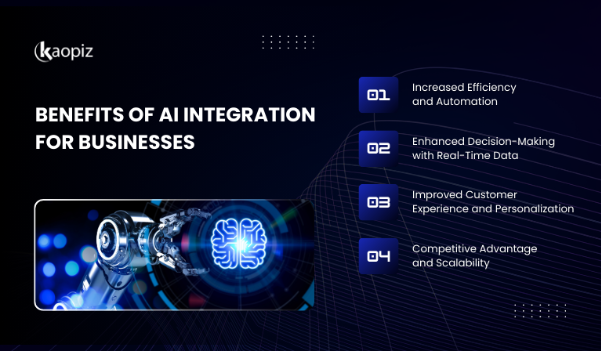
For Japanese enterprises pursuing digital transformation, practical AI automation focuses on improving efficiency, supporting data-driven decisions, and enabling scalable enterprise operations.
The growing demand for AI automation in Japan
The demand for AI automation in Japan is growing as organizations modernize their IT environments and respond to labor shortages.
According to industry research, Japan’s AI market reached ¥3.5 trillion (about $25 billion) in 2023 and is projected to reach ¥7 trillion by 2028, reflecting strong enterprise investment in AI technologies.
Adoption across industries is also increasing:
- 75% of large enterprises in Japan already use AI technologies in some capacity.
- 45% of manufacturing companies have adopted AI, particularly for quality control and predictive maintenance.
- Cloud computing usage among Japanese firms has reached around 69%, providing the infrastructure needed for AI deployment.
These trends show that enterprise AI implementation in Japan is steadily moving from experimentation toward operational deployment.
Why enterprises focus on practical AI automation
Despite strong interest in AI, many organizations struggle with implementation challenges. Studies show that Japanese enterprises often take a cautious approach to adopting new technologies, prioritizing reliability and operational stability.
As a result, companies increasingly focus on AI workflow automation that delivers measurable improvements in daily business processes.
Key drivers include:
Operational efficiency
AI systems can automate repetitive tasks such as document processing, data validation, and operational monitoring.
Workforce shortages
Japan’s aging population and shrinking workforce are pushing companies to automate routine tasks to maintain productivity.
Faster decision-making
AI technologies allow enterprises to process large volumes of operational data and generate insights more quickly.
These benefits explain why AI automation for enterprise operations is becoming a priority in many digital transformation strategies.
Practical AI automation use cases
Successful enterprise AI implementation often begins with specific operational use cases that deliver clear business value.
Document processing and data extraction
Many enterprise operations rely heavily on documents such as invoices, reports, and contracts. AI-powered systems can automatically extract and classify information from these documents.
This form of AI workflow automation significantly reduces manual processing time while improving data accuracy.
Image recognition and visual inspection
In manufacturing, logistics, and retail environments, AI-based image recognition systems can automate quality inspection and monitoring.
These systems detect defects, identify objects, and analyze visual data in real time, supporting more efficient operations.
Intelligent workflow automation
AI can enhance enterprise workflows by analyzing operational patterns and recommending process improvements.
For example, AI systems can automate:
- customer service routing
- operational reporting
- supply chain monitoring
- predictive maintenance alerts
These solutions allow organizations to improve efficiency while maintaining operational stability.
Challenges in enterprise AI implementation
While the benefits are clear, implementing AI automation for Japanese enterprise operations still presents several challenges.
Legacy system integration
Many Japanese enterprises rely on long-established IT systems that were not originally designed for AI integration.
Data fragmentation
Enterprise data is often stored across multiple platforms, making it difficult to build unified data pipelines for AI models.
Shortage of AI engineers
Japan faces a significant shortage of data scientists and AI specialists capable of implementing enterprise AI solutions.
Because of these challenges, many organizations collaborate with technology partners that can support both AI development and system integration.
Kaopiz, focusing on practical AI automation
To overcome these barriers, enterprises increasingly seek partners capable of implementing AI within real operational environments.
Kaopiz, focusing on practical AI automation, supports organizations in building AI-driven systems that integrate directly into enterprise operations and workflows.
Rather than focusing only on AI experimentation, Kaopiz emphasizes practical enterprise AI implementation, including:
- building data pipelines for AI models
- integrating AI with enterprise platforms
- deploying automation systems in production environments
This execution-focused approach helps companies move from AI prototypes to operational automation.
From AI experimentation to enterprise automation
Many organizations begin AI adoption with pilot projects or proof-of-concept experiments. While these initiatives demonstrate technical feasibility, real value is created only when AI becomes embedded in everyday business processes.
Successful AI automation for Japanese enterprise operations typically follows a structured approach:
- Identify high-impact automation opportunities
- Integrate AI into existing enterprise workflows
- Expand automation across departments
This gradual strategy allows companies to reduce implementation risk while building long-term AI capabilities.
The future of AI automation in Japanese enterprises
As digital transformation continues, AI automation in Japan will increasingly focus on operational integration rather than isolated experimentation.
Technologies such as machine learning, computer vision, and intelligent workflow automation will enable enterprises to process data more efficiently and improve decision-making across the organization.
For Japanese companies, the next phase of AI adoption will focus on scalable enterprise automation that enhances productivity and supports long-term innovation.
Conclusion
AI is becoming an essential tool for modern enterprise operations. However, achieving measurable business impact requires more than deploying AI models.
Successful AI automation for Japanese enterprise operations depends on integrating AI technologies into enterprise systems, workflows, and operational processes.
By working with experienced partners such as Kaopiz, focusing on practical AI automation, enterprises can move beyond experimental projects and implement scalable automation solutions that improve productivity, accuracy, and operational efficiency.
INFORMATION CONTACT:
Email: marketing.jp@kaopiz.com
Address:
Japan Office:
03-5809-2633
3F, 3-8-8 Minami Ikebukuro, Toshima-ku, Tokyo
Singapore Office:
1 Raffles Place #19-61, One Raffles Place Tower 2, Singapore 048616
Vietnam Office 1:
024-6652-2105
1-2-4-5F, CT1-C14 Bac Ha building, To Huu street, Dai Mo ward, Hanoi
Vietnam Office 2:
024-6652-2105
12F, SHB Da Nang building, 06 Nguyen Van Linh street, Hai Chau ward, Da Nang
Source: FG Newswire