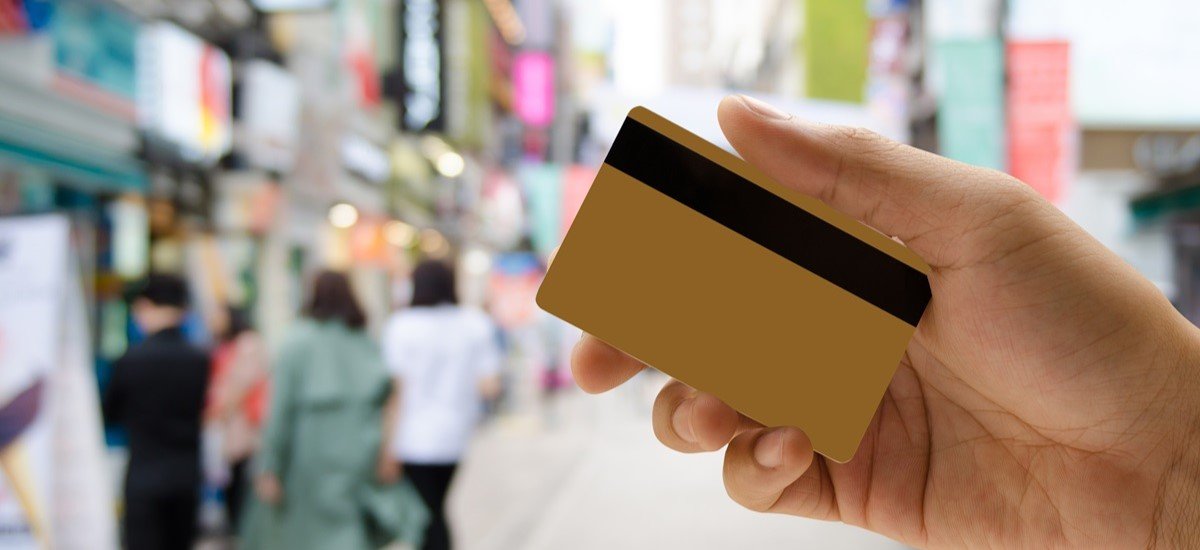
The Midnight ATM and the New Digital Alternative
Picture this: it is 11:47 PM in Seoul’s Hongdae district. A freelance graphic designer has just wrapped a client meeting at a rooftop café. Her invoice will not clear for another two weeks, but her monthly rent ₩850,000 is due tomorrow. She pulls out her smartphone, opens a familiar app, and within four minutes, cash is sitting in her checking account, sourced entirely through her credit card.
This scene plays out thousands of times each night across South Korea, one of the world’s most sophisticated credit card economies. South Korea processes more than 10 billion credit card transactions annually, and its card penetration rate consistently ranks among the highest globally. Yet despite a near-seamless digital payment infrastructure, the demand for liquid cash drawn against credit remains persistent, complex, and rapidly evolving.
This post explores the full landscape of how Koreans access cash through credit cards from legacy card loan products to cutting-edge fintech platforms, from tightly regulated bank services to practices operating in financial gray zones and what the next wave of innovation means for consumers and the broader economy.
Korea’s Credit Card Culture: A Brief History
To understand today’s cash access ecosystem, you have to go back to the late 1990s. South Korea emerged from the 1997 Asian financial crisis battered but determined to modernize its financial infrastructure. The government made a bold bet: subsidize consumer credit card usage to stimulate domestic spending and simultaneously drag Korea’s sizable shadow economy into the formal, taxable record.
The policy worked almost too well. Credit card companies flooded the market with promotional offers. Approval standards loosened dramatically. Card issuance tripled within four years.
Then came the 2003 credit card crisis, which left over 3.7 million Koreans — roughly 1 in 10 adults — in default. The hangover was severe, but the structural outcome was revealing: credit cards had become so deeply embedded in Korean consumer psychology that even after the crash, usage rebounded steadily. Today, household names like Shinhan Card, Samsung Card, KB Kookmin Card, and Hyundai Card collectively serve over 100 million active card accounts in a country of 52 million people.
The cashless revolution accelerated through the 2010s with government tax incentives for card usage, mandatory point-of-sale terminal requirements for most merchants, and the explosive rise of QR-based mobile payments. By 2023, card transactions accounted for more than 68% of all private consumption in South Korea, a figure that rivals Scandinavia.
Why Koreans Seek Cash Against Credit
If digital payments are so seamlessly integrated into Korean daily life, why does the demand for cash-backed credit persist at all? The answer is structural, not behavioral.
Cost of living pressure is a starting point. Seoul consistently ranks among Asia’s most expensive cities. Housing costs have surged dramatically average monthly rents in Gangnam exceed ₩1.5 million for a studio, and jeonse (lump-sum rental deposit) arrangements can require deposits of ₩200 million to ₩400 million. When liquidity crunches hit, credit card cash access becomes a lifeline.
The gig economy has expanded dramatically. Platform workers, delivery drivers, freelancers, tutors, content creators now represent an estimated 8.5 million workers in Korea, according to the Korea Employment Information Service. Many lack the stable income documentation required for traditional loans. Credit cards, already in their wallets, become their most accessible financial tool.
Digital payment gaps also persist. Some landlords, traditional markets, private tutors, and small service providers still deal exclusively in cash. And specific use cases: emergency medical co-pays, last-minute travel, informal childcare payments remain stubbornly cash-dependent.
Traditional Credit Card Cash Methods
Korean credit card issuers have long offered formal mechanisms for converting credit into cash.
Card Loans (카드론)
Card loans are mid-term lending products offered directly by card companies. Borrowers can access between ₩300,000 and ₩30 million with repayment periods ranging from 3 to 36 months. Interest rates typically fall between 11% and 19.9% APR, depending on creditworthiness. Approvals are often instant for cardholders with clean payment histories.
Short-Term Cash Advances (단기카드대출)
Distinct from card loans, short-term advances are designed for immediate, small-scale cash needs usually under ₩3 million and are repaid in full by the next billing cycle. Fees are calculated daily, which means the effective annual rate can climb above 25% if the advance is carried even a few extra days.
Installment Cash Services
Some issuers offer structured installment-based cash products, where a fixed amount is advanced and repaid in equal monthly installments over 6 to 24 months. These products carry lower rates than short-term advances and are marketed to salaried workers needing predictable repayment schedules.
Each of these methods is regulated, reported to credit bureaus, and clearly documented in cardholder agreements. That transparency, however, comes with the trade-off of higher costs and eligibility barriers.
The Rise of Digital Fintech Alternatives
The past five years have seen a tectonic shift in how Koreans access credit-backed cash, driven by mobile-first financial platforms.
KakaoBank, launched in 2017 and now boasting over 22 million customers, redefined the personal loan experience with 100% mobile approval processes, real-time underwriting, and annual interest rates starting as low as 3.99% for qualified borrowers. Its “mini loan” productoffering up to ₩3 million with instant disbursement — became a cultural phenomenon almost overnight.
Toss (Viva Republica) followed with an embedded finance model that allows users to access cash advances, BNPL products, and personal credit lines all within a single super-app interface. Toss’s AI-driven credit assessment considers alternative data points, spending patterns, bill payment histories, subscription behaviors that legacy banks typically ignore.
KBank, Korea’s first internet-only bank, has focused heavily on serving the underbanked, offering credit products to gig workers and self-employed borrowers with non-traditional income profiles.
Together, these platforms have compressed approval times from days to minutes, reduced documentation burdens, and applied competitive downward pressure on interest rates across the industry.
신신용카드 현금화: What It Is and How It Works
Beyond the regulated products offered by banks and card companies, a parallel ecosystem has long existed in Korea. The practice known as 신신용카드 현금화 literally, “new credit card cash-out” refers to informal or semi-formal methods by which individuals convert available credit card limits into cash, typically through third-party intermediaries or merchant-based workarounds.
In a typical arrangement, a broker facilitates a fictitious or semi-real transaction in which the cardholder “purchases” a product or service at a marked-up price. The broker then returns the majority of the funds, usually 85% to 92% of face value — in cash, retaining the remainder as a service fee. The appeal is clear: no credit inquiry, no formal loan documentation, and near-instant access to funds.
The practice is used most commonly by individuals facing credit score barriers, those who have exhausted formal borrowing limits, or those needing cash without a formal loan record.
However, the risks are equally significant:
- High effective cost: Fees of 8–15% on a short-term basis translate to annualized costs far exceeding any regulated product
- Legal gray areas: Korean financial law categorizes most forms of this practice as violations of credit card usage terms and potentially as fraud; cardholders can face account termination
- Credit score vulnerability: Chargebacks, disputed transactions, or issuer investigations can severely damage credit ratings
- Broker reliability: Unregulated intermediaries carry the risk of fraud, extortion, or personal data misuse
Consumer advocacy groups and financial counselors in Korea consistently advise against the practice not as a moral judgment, but as a risk assessment.
Regulatory Landscape and Consumer Protection
Korean financial regulators have grown increasingly attentive to the gray-zone cash ecosystem.
The Financial Supervisory Service (FSS) and Financial Services Commission (FSC) have issued multiple rounds of consumer warnings targeting both informal cash-out brokers and cardholders. In 2022 and 2023, the FSC specifically updated enforcement guidelines to hold both intermediaries and consumers potentially liable for fraudulent transaction facilitation.
Card issuers are now required to deploy transaction monitoring systems that flag atypical merchant patterns consistent with cash-out schemes. Several major issuers including Shinhan Card and KB Kookmin Card — have publicly stated their systems terminate accounts detected engaging in such activities.
On the consumer protection side, the FSS has expanded its credit counseling services and partnered with the Korea Credit Counseling and Recovery Service (CCRS) to provide accessible debt restructuring pathways for borrowers caught in high-cost informal credit cycles.
Emerging Trends Reshaping Cash Access in 2025–2026
The landscape is transforming on multiple fronts simultaneously.
BNPL expansion has surged, with platforms like Naver Pay and Kakao Pay offering interest-free deferred payment windows of 30 to 90 days, effectively reducing the demand for short-term cash advances.
Open banking APIs, fully operational in Korea since 2022, have enabled fintech companies to aggregate financial data across institutions, leading to dramatically more accurate credit scoring and more personalized product offerings.
AI-powered underwriting is extending credit access to previously excluded segments gig workers, young adults with thin credit files, and seniors through alternative data analysis that factors in mobile payment behavior, utility bills, and even rental payment histories.
Embedded finance is quietly integrating credit products into non-financial contexts: e-commerce checkout flows, delivery platform dashboards, and B2B procurement tools reducing friction further.
Smart Strategies for Koreans Needing Quick Cash
For individuals facing liquidity pressure, a hierarchy of responsible options exists well before reaching informal cash-out methods:
- 햇살론 (Sunshine Loan): Government-backed low-interest loans for low-to-mid income earners, with rates as low as 10.5% APR
- 서민금융진흥원 (Korea Inclusive Finance Agency): Provides micro-lending, emergency living expense loans, and debt counseling services
- Credit union loans (신협 / 새마을금고): Member-based institutions offering favorable rates, often below 8% APR for qualified members
- Employer salary advances: Many Korean corporations and platforms now offer on-demand pay through payroll integration tools
- High-yield emergency savings: KakaoBank and Toss both offer savings accounts with annualized rates of 3.5–4.5%, encouraging emergency fund building
What the Future Holds
Over the next five years, Korea’s credit cash landscape will be reshaped by three dominant forces.
Regulatory tightening will continue, with the FSC likely introducing mandatory disclosure requirements for third-party cash facilitation services and stronger consumer liability frameworks.
Digitization will commoditize formal credit products, further approval times will approach seconds, rates will compress toward single digits for prime borrowers, and product personalization will deepen through AI.
Financial literacy investment is accelerating, with both public programs and private platforms building tools that help consumers model the true cost of different credit instruments before committing.
The result, over time, should be a shrinking of the informal cash ecosystem not through prohibition alone, but through the displacement of its core appeal: speed, discretion, and accessibility. As regulated platforms deliver those same qualities at lower cost, the calculus shifts decisively.
Informed Access Is the True Credit Advantage
Korea’s credit card cash economy is a mirror of the country itself: sophisticated, dynamic, occasionally contradictory, and always evolving at remarkable speed. From the institutional architecture of card loans to the algorithmic precision of KakaoBank’s instant approvals, the options available to Korean consumers today are broader, faster, and more transparent than at any prior point in history.
The smartest financial move is not always the fastest or most convenient one. It is the one made with full awareness of costs, risks, and alternatives.
If you are navigating a liquidity challenge in Korea whether as a resident, an expat, or an entrepreneur take the time to map the full landscape before acting. The right tool almost certainly already exists within the regulated ecosystem, and it almost certainly costs less than the shortcuts.
Start with your bank. Compare the fintech options. Know your rights. And when in doubt, reach out to Korea’s free financial counseling services before paying a premium for urgency.
Source: FG Newswire