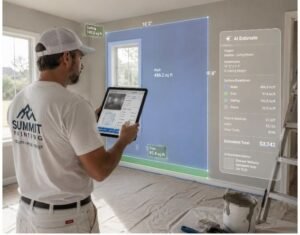
Marcus had been running his painting company for eleven years. He knew every trick of the trade: how to read a wall’s texture, when to add a second coat, how to price a job without losing money. But in the spring of 2025, he almost lost a $47,000 commercial contract because his competitor, using AI for his painting business, sent a detailed project proposal complete with color mock-ups, room-by-room cost breakdowns, and a digital timeline within two hours of the client walkthrough. Marcus took three days. The client had already signed elsewhere by the time his email landed.
That was the moment Marcus realized the painting business wasn’t just changing. It had already changed.
Across the country, painting contractors, solo operators, and multi-crew companies alike are discovering that ai tools for painting business aren’t some distant future. They’re the difference between winning jobs and watching competitors walk away with them. Here are the seven AI trends reshaping the industry right now, and what smart painting business owners are doing about each one.
1. AI-Powered Estimation and Quoting: Faster, Sharper, More Profitable
The old way of estimating a job meant measuring walls by hand, pulling up a spreadsheet, and hoping your numbers held up when the client started asking questions. The new way takes minutes and produces something far more impressive.
AI estimation tools can now analyze photos of a space, calculate surface area, factor in prep work, primer needs, and labor hours, and generate a fully formatted quote before you’ve driven back to the office. Some platforms integrate large language model capabilities, the same technology powering tools like Dify and LangChain, both consistently ranked among the top AI repositories on GitHub, to create proposals that explain the reasoning behind every line item in plain language that clients actually understand.
The result is fewer back-and-forth emails, more signed contracts, and estimates that stay consistent regardless of whether it’s your best salesperson or a new hire sending them out. When your quoting process is fast and professional every single time, it stops being a bottleneck and starts being a competitive advantage. Contractors who have adopted AI estimation tools report spending significantly less time on the administrative side of bidding, freeing them up to visit more sites, build better client relationships from best CRM tools for painting business , and focus on the work itself.
2. Visual AI and Color Simulation: Selling the Dream Before the First Brush Stroke
One of the hardest parts of selling a paint job has always been helping a client see it before it happens. Most homeowners genuinely struggle to visualize how Dusty Sage looks on a 14-foot accent wall. Most commercial clients cannot picture how a rebrand translates to their lobby until someone shows them.
AI-powered paint color visualizer tools have largely solved this problem. Using generative models and image processing, contractors can now upload a photo of a space and render it in any color, finish, or palette within seconds. The client sees exactly what they are buying. Decision time drops dramatically. Upsells, including accent walls, trim treatments, and specialty finishes, become much easier to close because the client isn’t being asked to imagine anything. They’re looking at it.
Tools built on open-source visual AI frameworks are making this accessible even to small operators who can’t afford enterprise software. The barrier to delivering a premium, agency-level client experience has essentially collapsed, and painting businesses that use these color simulation and visualization tools in their sales process routinely report higher average job values because clients are more confident making bigger decisions when they can see the outcome in advance.
3. Workflow Automation: Stop Running Your Business Like It’s 2015
If you are still manually following up with leads, scheduling crews via group text, and invoicing from a template you built five years ago, you are spending hours every week on work that genuinely does not need a human being to do it.
This is where AI workflow automation platforms are making a profound difference for painting businesses. Tools like n8n, the visual automation platform that has surged to near the top of AI repositories on GitHub, let you build automated pipelines without writing a single line of code. A new lead comes in from your website and gets an instant acknowledgment email. It gets scored based on job size and location. It gets routed to the right crew calendar. It triggers a follow-up sequence if no appointment is booked within 48 hours. All of this happens without you touching it.
For a painting business, this kind of automation means your admin overhead shrinks significantly, nothing falls through the cracks during busy season, and your team focuses on painting rather than paperwork. fatcamel.ai is built specifically for small and mid-sized businesses that need intelligent automation without a dedicated IT team to manage it, bringing these kinds of workflows within reach for independent contractors and growing crews alike. The idea is simple: your systems should work as hard as you do, even when you’re on a ladder three floors up.
4. AI Scheduling and Crew Optimization: The Right People on the Right Job
Scheduling a painting crew sounds straightforward until you’re juggling eight jobs simultaneously, variable weather forecasts, subcontractors with different availability, supply delays, and three crews with entirely different skill sets. One wrong call and you’ve got idle painters on the clock or an understaffed job bleeding into expensive overtime.
AI scheduling tools with a crm for painting contractors are changing this by doing what humans are not naturally good at: holding dozens of variables in mind simultaneously and optimizing across all of them in real time. These systems factor in travel time between jobs, crew certifications (some projects legally require certified lead-paint contractors), project stage dependencies, and even hourly weather data. When a job gets pushed due to rain, the system automatically reshuffles the rest of the week and notifies every crew member without anyone having to make a phone call.
Beyond the obvious time savings, this kind of intelligent scheduling has a measurable impact on profitability. Fewer idle hours, better job sequencing, and smarter crew assignments can meaningfully improve your margins without you taking on a single additional job. It’s the operational equivalent of getting more output from the same inputs, which is what every growth-minded contractor is after.
5. AI-Driven Marketing and Local SEO: Getting Found Before the Competition
The best painting company in any city can still lose business to a competitor who simply shows up first on Google. In 2026, AI is transforming how painting businesses build their digital presence, and the gap between businesses that use it and those that don’t is widening every month.
AI writing and content tools now help painting companies produce consistent, high-quality blog posts, social media content, project case studies, and Google Business updates without the expense of hiring a marketing agency. More importantly, AI tools can analyze local search trends and identify exactly what potential clients in your area are searching for: interior painters who offer same-week quotes, the best exterior paint for humid climates, and how to choose between matte and eggshell finishes. Businesses that produce content answering these specific questions get found more often, and by people who are already ready to hire.
AI agents can also monitor your reviews, suggest responses, flag negative sentiment early, and draft follow-up campaigns to your past clients at the right moment. For example, a week before spring, when homeowners begin thinking about exterior refreshes, or just before the holiday season, when commercial clients want their offices refreshed. This kind of proactive, always-on marketing used to require either a dedicated staff member or a monthly agency retainer. Now it’s becoming table stakes for competitive painting businesses of any size.
6. AI for Inventory and Supply Chain Management: Fewer Surprises, Better Margins
Every painting contractor has experienced the nightmare: you’re three-quarters through a job, the client requests a second coat on the ceiling, and you’re short on product. Emergency runs to the paint store cost time and erode margin. Worse, over-ordering ties up cash in product sitting in a van for months, slowly degrading.
AI inventory tools solve this by learning the patterns specific to your business over time. They track how much product different job types actually consume, flag when prices are rising in the supply chain so you can lock in orders early, and generate automatic purchase suggestions based on your upcoming job schedule. Some platforms integrate directly with supplier systems, allowing replenishment orders to be placed and confirmed without ever opening a browser or making a phone call.
For larger painting operations with multiple crews and vehicles, AI-assisted supply management can meaningfully improve margins on identical revenue. The difference comes not from working harder or charging more, but from pure operational efficiency that compounds over time and quietly separates thriving businesses from ones that always feel stretched thin despite doing plenty of work.
7. Personal AI Agents: Your Business, Always On
Perhaps the most significant shift of all isn’t a single tool or a specific feature. It’s the emergence of the personal AI agent: a system that doesn’t just respond to your requests but proactively monitors your business, flags problems, and takes action on your behalf around the clock.
Imagine an AI that reviews your job pipeline every morning and alerts you when a quote has gone cold for too long. That drafts a customized re-engagement message for a prospect who went quiet after a site visit. That notices your crew is consistently running long on bathroom repaint jobs and flags it as a potential margin issue worth investigating. That automatically requests Google reviews from clients three days after job completion and follows up politely if they haven’t posted one within a week. This is not a fantasy. It is what businesses deploying agent-based AI are already doing today.
Frameworks like LangChain and CrewAI, both featured prominently in roundups of the most-starred AI repositories on GitHub in 2026, are enabling exactly this kind of multi-agent, always-on business intelligence. For painting business owners who wear a dozen different hats before noon, these agents function like a tireless operations manager, marketing coordinator, and business analyst working in parallel. fatcamel.ai is focused on making this kind of capability accessible to independent contractors and growing painting companies that don’t have an enterprise software budget but still want to compete.
A Tool Worth Knowing About: fatcamel.ai
If you’ve read through all seven trends and found yourself thinking, “I want this, but I don’t know where to start,” fatcamel.ai is worth exploring.
Most AI platforms are designed for companies with dedicated operations teams, IT departments, and implementation budgets. fatcamel.ai takes a different approach, targeting business owners who are answering calls, managing crews, winning jobs, and trying to grow, all at the same time. The platform brings together intelligent automation, AI-powered workflows, and agent-based tools in a way that’s designed to be practical from day one rather than requiring weeks of setup.
Whether you want to automate your lead follow-up, streamline your quoting process, or build a smarter system for managing client communications, it’s worth a look if you’re a contractor who wants the operational benefits without needing a technical team behind you.
The Bottom Line
Marcus eventually caught up. He spent two weekends exploring AI tools for his painting business, automated his quoting process, started using visual simulation with clients, and set up a simple workflow for lead follow-up. Within four months, his close rate on quotes had climbed from 31% to 52%. He wasn’t a tech person. He didn’t attend a conference or hire a consultant. He just stopped waiting for the right moment and started.
The painting industry is tactile, skilled, and deeply human. A well-painted room is still the result of experienced hands, trained eyes, and genuine craft. But the business of painting is being transformed by AI at every layer: how you win jobs, schedule your crews, manage your supply, market your services, and keep clients coming back year after year.
The contractors who thrive through the rest of this decade won’t necessarily be the most technically gifted painters. They will be the ones who pair exceptional craft with intelligent tools, and who move quickly enough to build that advantage before everyone else catches on.
Interested in exploring AI tools designed for the way small businesses actually operate? Visit fatcamel.ai to see what intelligent automation looks like when it’s built for people who are too busy running a business to spend weeks setting up software.
Frequently Asked Questions
1. Do I need technical knowledge to start using AI tools in my painting business?
Not at all. Most AI tools built for small businesses today are designed with non-technical users in mind. If you can use a smartphone and send emails, you have everything you need to get started. Platforms like fatcamel.ai are specifically built so that business owners can set up and use intelligent automation without any coding background or IT support.
2. How much does it typically cost to bring AI into a painting business?
Costs vary widely depending on the tools you choose, but many entry-level AI platforms start at affordable monthly subscriptions, often less than what you’d spend on a single emergency supply run. The more useful way to think about it is return on investment: if an AI quoting tool helps you close two additional jobs a month, it pays for itself many times over within the first billing cycle.
3. Can AI really replace the human side of client relationships in a service business?
AI is not designed to replace the human connection that wins loyal clients. It handles the repetitive, time-sensitive, and administrative tasks so that you have more time and energy to invest in those relationships. The contractor who responds to a lead within minutes because their system is automated, then shows up to the site fully prepared, makes a far better first impression than one who is buried in paperwork.
4. What is the best AI tool to start with if I’m just getting into this?
Workflow automation is generally the smartest starting point because it delivers immediate, visible time savings. Setting up automated lead follow-up and quote reminders alone can recover hours every week. From there, AI-powered quoting and visual simulation tools tend to have the most direct impact on revenue. Start with one tool, get comfortable, and build from there.
5. How does AI help with winning more jobs, not just running the business more efficiently?
AI improves your win rate at multiple points in the sales process. Faster quotes mean clients hear from you before they’ve committed to a competitor. Visual simulation tools help clients say yes more confidently. Automated follow-up means fewer leads quietly go cold without anyone noticing. Each of these individually moves the needle, and together they compound into a meaningfully higher close rate.
6. Is my business data safe when using AI platforms?
Reputable AI platforms invest heavily in data security and are typically built on encrypted infrastructure. Before signing up for any tool, it is worth reviewing its privacy policy and checking whether it stores your client data, how it is used, and whether it shares it with third parties. Established platforms are transparent about this, and it is a fair question to ask before onboarding.
7. How long does it take to see real results after adopting AI tools?
Most painting business owners who commit to even one or two AI tools report noticeable changes within four to six weeks. Faster quote turnaround and improved lead follow-up tend to show results the quickest. Deeper operational benefits, such as improved scheduling efficiency and margins, typically become visible over a full season of use once the tools have learned the patterns of your specific business.
Source: FG Newswire