Modern electronics manufacturing is rapidly evolving toward full automation, where efficiency, precision, and speed determine competitiveness. In this transformation, Palletizer and AGV robots have become critical technologies supporting smart production environments. For industries such as wire harness and PCBA manufacturing, where production involves complex assembly, packaging, and logistics, these automation systems are no longer optional but essential.
Wire harness and PCBA manufacturers operate in highly structured production environments with multiple stages of assembly, inspection, packaging, and storage. Each stage requires seamless coordination to avoid delays and maintain quality standards. Palletizers and AGVs bridge this gap by automating repetitive physical tasks and optimizing internal material flow. Their integration enhances productivity while reducing labor dependency and operational risks.
What Are Palletizer and AGV Robots in Industrial Automation?
Palletizers are end-of-line automation machines designed to stack finished products onto pallets in a predefined pattern. These products may include cartons, bags, or containers. The system ensures that stacking is uniform, stable, and ready for storage or transportation. In high-volume industries like electronics manufacturing, palletizers eliminate manual stacking errors and improve packaging consistency.
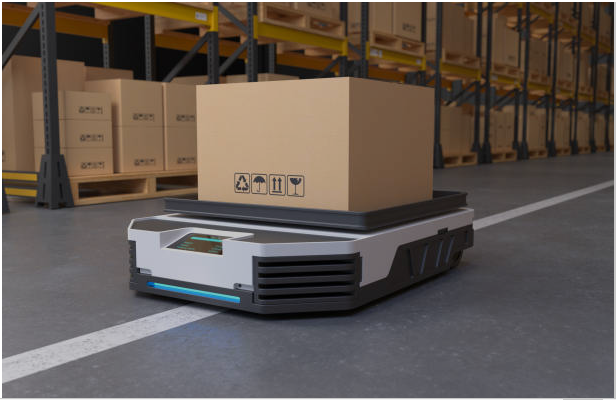
AGVs, or Automated Guided Vehicles, are intelligent transport robots used within factories and warehouses. Their main role is to move materials such as raw components, semi-finished goods, and finished products between production zones. They operate without human drivers, following predefined routes or dynamic navigation systems. AGVs are widely recognized as a core element of smart factories and unmanned warehouse systems.
Together, Palletizer and AGV robots create a connected automation flow where production output is efficiently packaged and transported without manual intervention.
Why Wire Harness and PCBA Manufacturing Needs Automation?
Wire harness and PCBA manufacturing are both precision-driven industries. A wire harness consists of organized electrical cables and connectors used in automobiles, electronics, and industrial equipment. PCBA (Printed Circuit Board Assembly) involves mounting electronic components onto circuit boards with strict accuracy requirements.
These industries face several operational challenges:
- High mix and low-to-medium volume production
- Strict quality control requirements
- Complex material handling and traceability needs
- Labor-intensive packaging and logistics operations
Without automation, these processes can become inefficient and error-prone. Manual handling increases the risk of damaged components, mislabeling, and inconsistent packaging. Additionally, frequent movement of materials across production lines slows down overall throughput.
This is where Palletizer and AGV robots provide a strategic advantage by automating repetitive logistics tasks and supporting continuous production flow.
Role of Palletizer and AGV Robots in Smart Manufacturing Systems:
In a smart factory environment, Palletizer and AGV robots work as interconnected systems that improve production efficiency from end to end.
- Palletizers in Wire Harness and PCBA Production:
Palletizers are primarily used at the final stage of production. Once wire harness bundles or PCBA units are packed, palletizers automatically arrange them into optimized stacking patterns. This ensures:
- Consistent stacking quality
- Reduced manual labor in packaging areas
- Improved warehouse readiness
- Faster dispatch preparation
In electronics manufacturing, product protection is critical. Palletizers help reduce human handling, thereby minimizing physical damage or contamination risks during packaging.
- AGVs in Internal Logistics Flow:
AGVs handle the movement of materials throughout the production facility. In wire harness and PCBA manufacturing plants, they are commonly used for:
- Transporting raw materials to assembly lines
- Moving semi-finished products between workstations
- Delivering finished goods to palletizing areas
- Transferring palletized loads to storage zones
AGVs ensure continuous material flow, eliminating delays caused by manual transportation. They also improve workplace safety by reducing forklift usage and human traffic in industrial zones.
Integration of Palletizer and AGV Robots in Manufacturing Workflow
The true value of automation appears when Palletizer and AGV robots operate together as a unified system.
A typical workflow in a wire harness and PCBA manufacturing facility looks like this:
- Raw materials are delivered to production lines using AGVs
- Wire harnesses or PCBA units are assembled on production stations
- Finished products are transferred to packaging zones
- Palletizers automatically stack packaged products
- AGVs transport finished pallets to warehouse storage areas
This integrated system creates a continuous production loop with minimal human intervention. It reduces bottlenecks, improves timing accuracy, and ensures smooth coordination between production and logistics departments.
Key Benefits for Wire Harness and PCBA Manufacturers
The key benefits for wire harness and PCBA manufacturers are listed below:
- Improved Production Efficiency:
Automation reduces manual handling time, allowing production lines to operate continuously without delays.
- Enhanced Accuracy and Consistency:
Palletizers ensure uniform stacking patterns, while AGVs follow precise routes, reducing human errors.
- Reduced Labor Dependency:
With rising labor costs, automation helps manufacturers maintain output without increasing workforce size.
- Better Workplace Safety:
AGVs replace forklifts in many cases, reducing accident risks in busy factory environments.
- Smart Factory Transformation:
Both technologies support digital manufacturing systems by integrating with MES and warehouse management platforms.
The Future of Automation in Electronics Manufacturing
The adoption of palletizer and AGV robots is part of a larger shift toward Industry 4.0. In the future, wire harness and PCBA manufacturers will increasingly rely on fully connected systems where machines communicate and coordinate automatically.
Artificial intelligence, IoT connectivity, and real-time data analytics will further enhance these systems. AGVs will become more autonomous with advanced navigation, while palletizers will adapt dynamically to different product types and packaging requirements. This evolution will make manufacturing more flexible, scalable, and efficient, especially in industries that require high precision and fast turnaround times.
For Example:
A modern PCBA manufacturer integrates its production line with AI-enabled AGVs and smart palletizers connected through an IoT-based factory management system. When a batch of circuit boards is completed, the system automatically sends real-time data to the warehouse system. AGVs are instantly dispatched to collect the finished PCBA trays and transport them to the packaging area without human intervention.
At the same time, the palletizer receives product specifications through the central control system and automatically adjusts its stacking pattern based on box size, weight, and shipping requirements. If production shifts from one product model to another, the system updates instantly without manual reconfiguration.
Through AI-driven analytics, the factory also predicts material flow demand, ensuring AGVs are pre-positioned in high-demand zones. This reduces waiting time, minimizes congestion, and maintains continuous production flow.
As a result, the manufacturer achieves higher output efficiency, reduced downtime, and near-zero packaging errors, demonstrating how Industry 4.0 technologies transform electronics manufacturing into a fully intelligent ecosystem.
Conclusion:
In modern electronics production, automation is no longer a luxury but a necessity. Palletizer and AGV robots play a vital role in transforming traditional manufacturing into smart, efficient, and highly coordinated systems. For wire harness and PCBA manufacturers, these technologies improve production flow, reduce operational costs, and ensure consistent quality across all stages of manufacturing.
As factories continue to evolve into fully automated environments, the integration of palletizing and AGV systems will remain a foundational element of industrial success.
Source: FG Newswire