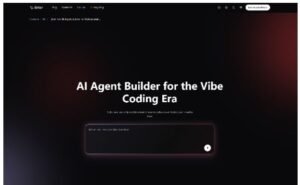
Building a robust software application has long been viewed as a massive financial black hole. Founders and product teams routinely budget hundreds of thousands of dollars, accepting endlessly delayed timelines as the unavoidable cost of doing business in the tech world. But what if this friction isn’t necessary? A profound structural shift is currently replacing manual development lifecycles with autonomous ecosystems that eradicate these painful bottlenecks at their source. Enter, a unified AI platform, which fundamentally changes the economics of software creation. Let’s break down the 7 hidden costs of traditional app development and explore how AI eliminates them completely.
1. The “Translation Gap” and Misaligned PRDs
A lot of projects start wasting budget before anyone even opens a code editor. It usually comes down to the “translation gap.” Product managers spend weeks building massive Product Requirement Documents (PRDs) and hand them over to the engineering team, hoping for the best.
The issue is that static text just doesn’t capture how dynamic software is supposed to actually work. Nuance gets lost. Engineers end up building what they read, not necessarily what the PM intended. By the time the sprint wraps up, the feature is slightly off, and the team is stuck doing expensive rework.
Enter cuts this cycle out entirely by merging the planning and building phases. Instead of drafting another static document, product teams can map visual logic and user flows directly in the platform. There is no handoff to mess up. The original product vision and the final engineering output stay perfectly in sync from day one.
2. Exorbitant Project Management Overhead
Running a standard dev team requires a lot of moving parts. You generally have to hire a project manager to hand out tasks and a tech lead to oversee the architecture. Then come the daily stand-ups, which mostly exist to ensure the frontend and backend developers aren’t getting in each other’s way. All of this extra management burns through a budget quickly.
Moving to an automated platform changes the equation. When you set up an AI agent builder in Enter, the system itself takes over the workflow. It maps out the exact steps needed to build a feature and breaks the work down into logical components, such as interface design, database setup, and security protocols. It essentially acts as a background project manager that tracks all your dependencies automatically, saving you from paying for manual oversight.
3. Subscription Bloat and Fragmented Stacks
Building a modern app usually means subscribing to a massive stack of disjointed services. You pay one company for frontend hosting, another for your database, a third for user authentication, and a fourth for object storage. Managing these disparate subscriptions is not only a logistical nightmare but a significant monthly drain on revenue.
Enter eliminates subscription bloat by providing a single, unified ecosystem. Through Enter Cloud, creators gain immediate access to built-in managed databases, secure environment variables, and scalable object storage all under one roof. You no longer have to manage a dozen different vendor contracts; everything required to scale an Enterprise application is natively integrated.
4. The Accumulation of Technical Debt
When human developers are under pressure from tight sprint deadlines, they inevitably take shortcuts. These “band-aid” fixes result in technical debt—a brittle, messy codebase that becomes exponentially more expensive to maintain and update over time. Eventually, companies are forced to halt new feature development just to refactor their old, broken code.
This costly cycle is entirely preventable through standardized automation. Because Enter relies on native, Enterprise-grade AI code generation, every single feature, API endpoint, and database schema is written with flawless syntax. The platform adheres strictly to modern engineering best practices, ensuring that the resulting architecture is clean, optimized, and entirely free of the legacy technical debt that plagues traditionally built software.
5. The Backend Integration Nightmare
A frontend team can put together a great-looking interface, but wiring it to a database is usually where projects hit a wall. Manually configuring API routes takes time. If someone makes a mistake with an endpoint, you aren’t just looking at launch delays—you’re looking at potential security risks.
Enter sidesteps this issue by keeping both sides of the stack in the same place. You don’t have to force two different systems to talk to each other. As you build out the user experience on the frontend, the platform automatically provisions the correct database routes in the background. It takes the manual API setup completely out of the equation.
6. Prototyping Roadblocks and Scaling Failures
Many teams try to save money by building their initial MVP on a basic, drag-and-drop visual builder. While this saves upfront costs, these “toy” platforms inevitably crash the moment they experience real user traffic. The company is then forced to spend hundreds of thousands of dollars rebuilding the app from scratch with code.
Enter operates on a philosophy of zero-lock-in and scalable architecture. Because the platform generates standard, readable code rather than proprietary visual logic, the applications you build are production-ready from the very first click. You can scale smoothly from 10 users to 10,000 users without ever needing to rebuild your platform.
7. The High Cost of Specialized DevOps
Finally, ensuring that your application stays online, secure, and load-balanced requires a dedicated DevOps engineer—one of the most expensive roles in the tech industry. For a solo founder or a lean startup, this salary alone can bankrupt the project.
With Enter, the complexities of DevOps are completely abstracted away. The platform’s autonomous agents understand how to deploy applications securely, manage environment variables, and ensure maximum uptime, providing you with Enterprise-level reliability without the Enterprise-level payroll.
Conclusion: Stop Paying the Friction Tax
The hidden costs of traditional software development—from misaligned requirements to technical debt and massive project management overhead—are no longer unavoidable. They are simply a friction tax paid by teams using outdated methods. Migrating to a unified platform like Enter allows businesses to permanently improve their financial trajectory. Leveraging an AI agent builder and reliable AI code generation ensures every dollar spent goes toward a scalable, debt-free product. Stop paying for past inefficiencies and start building efficiently today.
Source: FG Newswire