For more than a decade, the home gym was the centrepiece of personal wellness investment. Peloton bikes, cable machines, squat racks, and connected fitness mirrors turned spare bedrooms and garages into training spaces. The pandemic accelerated that trend dramatically — global home fitness equipment sales surged past $10 billion in 2020 alone.
But a quieter shift has been underway since. The home gym is no longer the fastest-growing room in the house. The home recovery room is.
From training harder to recovering smarter
The change reflects a broader evolution in how consumers think about health. The exercise-first model — where wellness meant working out more — is giving way to a recovery-first model, where the emphasis falls on what happens between workouts, between work days, and between the demands of modern life.
This is not a rejection of fitness. It is a recognition that the body adapts and improves during rest, not during effort. Sleep science, nervous system research, and the growing body of evidence around chronic stress have all contributed to a mainstream understanding that recovery is not passive — it is an active, investable category.
The market has responded. Infrared saunas, once found only in Nordic countries and luxury spas, are now sold as home installations across Europe and North America. The home sauna market in Europe is growing at over 6% annually, with infrared models surging at nearly 19%. Cold plunge tubs have crossed from athletic training facilities into residential use, driven by the popularity of cold exposure protocols and figures like Wim Hof. Brands like Brass Monkey in the UK and Plunge in the US sell dedicated units ranging from €3,000 to over €20,000.
Red light therapy panels, which use specific wavelengths to support cellular function, have followed a similar trajectory. Companies such as Joovv and Czech-based MITO LIGHT sell full-body panels for daily home use in the €500 to €3,000 range.
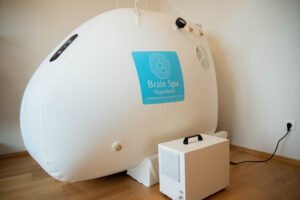
The latest entrant into the home recovery category is mild hyperbaric oxygen — soft-shell pressurised chambers that increase ambient air pressure to enhance oxygen absorption. These are not the clinical hyperbaric systems found in hospitals. They operate at lower pressures, typically between 1.3 and 1.5 atmospheres, and are designed for regular use at home. In Europe, this market is still in its early stages, but brands like Brain Spa Hyperbaric are establishing positions with an emphasis on education and accessibility rather than medical claims.
The economics of a recovery room
What makes this trend notable from a market perspective is the price point consumers are willing to pay. A quality infrared sauna costs between €5,000 and €50,000 depending on size and features. A cold plunge with integrated cooling runs €3,000 to €25,000. Red light panels sit at €500 to €3,000. Mild hyperbaric chambers fall in the €5,000 to €15,000 range.
The consumer building a dedicated recovery room may spend €15,000 to €50,000 equipping the space — comparable to what many spent on home gyms a decade ago, but with a fundamentally different philosophy behind the investment.
This spending is not limited to professional athletes or the ultra-wealthy. The typical buyer profile is a health-literate professional in the 35-to-55 age range, often already tracking health metrics through wearable devices, and motivated by a combination of performance goals, preventive health thinking, and post-pandemic awareness of cognitive and physical resilience.
The data layer driving hardware investment
One of the less obvious forces behind recovery room spending is the quantified self movement. Wearable devices — Oura Ring, Whoop, Apple Watch, Garmin — now provide daily metrics on sleep quality, heart rate variability, recovery scores, and readiness. These data points create a feedback loop that makes hardware purchases feel rational rather than aspirational.
When a wearable tells its user that their recovery score is low and their HRV has dropped, the motivation to invest in recovery tools increases. The data does not sell the hardware directly, but it creates the behavioural context in which spending €5,000 on a sauna or a mild hyperbaric wellness chamber feels like a logical next step rather than a luxury.
Where the trend is heading
The home recovery room is following the same adoption curve as the home gym — from early adopters and athletes to mainstream health-conscious consumers. Several factors suggest the trend will accelerate rather than plateau.
Housing and interior design markets are beginning to recognise recovery spaces as a category. Architects and interior designers report increasing requests for dedicated wellness rooms in new builds and renovations. The wellness real estate market — homes designed with health features built in — was valued at over $400 billion globally in 2023.
Insurance and corporate wellness programmes are beginning to acknowledge recovery as a legitimate health investment, particularly as research on chronic stress, burnout, and cognitive decline strengthens the business case for preventive health tools.
And the technology itself continues to mature. Prices on most recovery modalities are trending downward as manufacturing scales, while the underlying research base grows stronger with each year.
The home gym proved that consumers would invest five-figure sums in dedicated health infrastructure for their homes. The home recovery room is proving that the next generation of that investment will be about maintaining the person, not just training the body.
Source: FG Newswire