Why House Number Visibility Matters
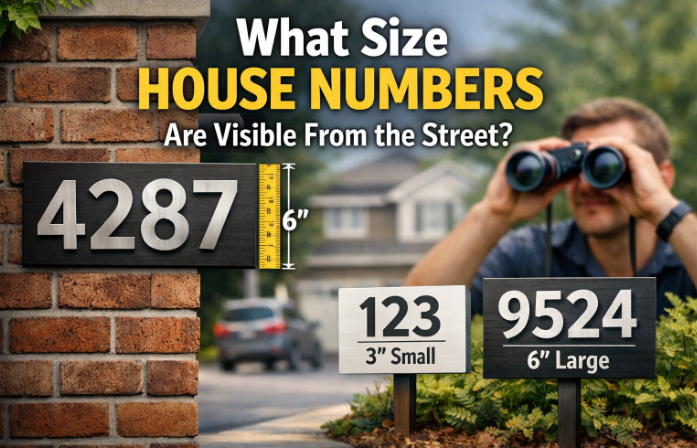
House numbers do more than identify your home—they help people find it quickly and easily. When numbers are clearly visible from the street, delivery drivers, visitors, and service providers can locate the correct address without confusion. More importantly, clear address numbers can help emergency responders such as paramedics, firefighters, and police reach the right property faster during urgent situations. Poorly placed or tiny numbers can slow everything down, especially at night or during bad weather. Visibility also plays a role in curb appeal. Well-chosen house numbers complement the exterior design and make the entrance look organized and intentional. Whether your home is close to the road or set farther back, selecting the right size ensures your address stands out without looking oversized or awkward on your exterior wall.
General Rule for House Number Visibility
A simple guideline often used in home design is that one inch of number height is readable from about ten feet away. This rule helps homeowners choose the right size based on how far their house sits from the street. For example, if your home is about forty feet away from the road, numbers around four inches tall are typically easier to read.
This guideline is not strict, but it provides a helpful starting point when selecting house numbers. Larger numbers are usually better because they remain visible in different lighting conditions and from various viewing angles.
Keep in mind that visibility also depends on other elements besides size. Color contrast, lighting, and placement all play a role in how easily someone can read the numbers.
When choosing a size, consider:
- Distance between the house and the street
- Lighting conditions at night
- Landscaping that might block the view
- The thickness and style of the numbers
Combining the right size with good placement ensures your address remains visible in most situations.
Recommended House Number Sizes Based on Distance
The distance between your house and the street is the biggest factor when choosing the right house number size. Numbers that look perfect up close may appear tiny when viewed from the curb. This is why many homeowners choose slightly larger numbers than the minimum recommendation.
Larger numbers not only improve readability but also create a stronger visual presence on the exterior of the home. Modern architectural styles often use bold address numbers as a design feature, especially on clean walls or entryways.
Below is a quick reference chart to help you select an appropriate size.
| Distance From Street | Recommended Number Size |
| 10–20 feet | 2–3 inches |
| 20–40 feet | 4 inches |
| 40–60 feet | 5–6 inches |
| 60–100 feet | 6–8 inches |
| 100+ feet | 8–12 inches |
Choosing a size from this range ensures your address remains visible for drivers approaching your home.
Houses 10–20 Feet From the Street
Homes located close to the sidewalk or curb usually do not need very large address numbers. In most cases, numbers between two and three inches tall are easy to read from the street. This size works well for townhouses, compact urban homes, and properties where the front door sits near the road.
Even though the distance is short, placement still matters. Numbers should be installed where they are clearly visible from the street rather than hidden near decorative elements or behind plants.
For houses in this range, these tips help maintain visibility:
- Mount numbers near the front entrance or porch
- Avoid placing them behind railings or decorations
- Use a color that contrasts with the wall
- Keep landscaping trimmed around the numbers
Small but well-placed numbers can remain highly visible when the house is located close to the street.
Houses 20–40 Feet From the Street
For homes that sit slightly farther back from the road, four-inch house numbers are usually the most practical choice. This size strikes a balance between visibility and subtle design, making it one of the most commonly used options for residential properties.
Four-inch numbers are large enough to be seen by drivers approaching the property while still blending nicely with most architectural styles. Many homeowners prefer this size because it does not overpower the front of the house.
To make four-inch numbers more effective:
- Choose thicker fonts that are easier to read
- Install them at eye level or slightly above
- Position them near exterior lighting when possible
- Avoid decorative fonts that reduce readability
When properly installed, four-inch numbers provide clear visibility for homes in this distance range.
Houses 40–60 Feet From the Street
Homes that sit forty to sixty feet from the street require larger numbers to remain visible from a distance. Five to six inch house numbers are often the best choice for this range because they are large enough to stand out without looking oversized.
This size works particularly well for suburban homes with front lawns or landscaping between the house and the road. As distance increases, thicker and bolder numbers help improve readability for drivers.
Homeowners in this range often benefit from:
- Larger number sizes for better visibility
- Simple fonts that are easy to recognize quickly
- Placement near entryways or garage doors
- Adequate lighting around the numbers
Five- or six-inch numbers also complement modern exterior designs, making them both functional and visually appealing.
Houses 60–100 Feet From the Street
When a home sits farther back from the road, visibility becomes more challenging. In this case, six to eight inch house numbers usually provide the clarity needed for people approaching the property.
Long driveways, large front yards, and landscaping can make smaller numbers difficult to see from the street. Larger numbers help solve this issue by increasing visibility at a distance.
For homes in this range, consider these improvements:
- Install numbers on a wall that directly faces the street
- Use bold, thick lettering rather than thin styles
- Add outdoor lighting for nighttime visibility
- Avoid placing numbers where trees or shrubs might block them
Larger address numbers make it easier for drivers to identify your home before they even reach the driveway.
Houses More Than 100 Feet From the Street
Properties located more than one hundred feet from the street often need eight to twelve inch numbers to remain clearly visible. Homes with long driveways, rural locations, or large front yards fall into this category.
In many cases, homeowners also place additional numbers closer to the street, such as on a mailbox or entrance sign. This helps visitors and delivery drivers locate the property without confusion.
For houses set far back from the road, these strategies are helpful:
- Use large address numbers on the home exterior
- Add numbers to the mailbox or driveway entrance
- Install lighting so numbers are visible at night
- Choose bold, high-contrast colors
These steps ensure your address remains easy to spot even from a long distance.
Other Factors That Affect House Number Visibility
While size plays a major role in visibility, several other elements can make house numbers easier or harder to read from the street. Contrast, lighting, font style, and placement all influence how clearly the address appears from a distance. Even large numbers can become difficult to read if they blend into the background or sit in a poorly lit area. Likewise, numbers placed behind plants, decorations, or architectural features may not be visible until someone is very close to the home. Paying attention to these details ensures the address remains clear in both daytime and nighttime conditions. When these factors work together with the right number size, they create a clean and practical address display that helps people find your home quickly..
Contrast Between Numbers and Wall
Color contrast makes a significant difference in how easily house numbers can be seen. When numbers blend into the background, they become difficult to read—even if they are large enough.
For example, dark metal numbers on a dark brick wall may look stylish but can reduce visibility from the street. Choosing colors that stand out against the wall ensures that the numbers remain readable from a distance.
Effective contrast combinations include:
- Black numbers on white or light walls
- Silver or stainless steel numbers on dark surfaces
- White numbers on dark siding
- Bronze numbers on neutral backgrounds
Good contrast allows drivers to recognize the address quickly without having to slow down or search for it.
Lighting Conditions
House numbers should remain visible even after the sun goes down. Without proper lighting, numbers can disappear into the darkness, making it difficult for visitors or delivery drivers to locate your home at night.
Exterior lighting near the entrance can help illuminate the numbers and improve visibility. Wall lights, porch lights, or directional lighting aimed toward the address can make a noticeable difference. Some homeowners also install backlit house numbers, which include built-in illumination that keeps the address visible after dark.
Ways to improve nighttime visibility include:
- Installing wall lights near the house numbers
- Using illuminated address signs
- Placing numbers under porch lighting
- Avoiding shadows from nearby structures
Proper lighting ensures that your address remains clear and readable no matter the time of day.
Font Style and Thickness
The style of the numbers also affects readability. Some decorative fonts may look attractive up close but become difficult to read from the street. Thin or overly stylized numbers can blend into the background or lose clarity at a distance.
Simple fonts with thicker strokes are usually easier to recognize quickly. Straightforward designs allow drivers to identify the address without needing to slow down or look closely.
For the best readability:
- Choose clean, modern fonts
- Avoid overly decorative number styles
- Use thicker strokes rather than thin lines
- Maintain spacing between numbers
Clear and simple number designs improve visibility while still complementing the overall look of the home.
Placement Location
Where you install the house numbers can affect how easily people see them from the street. Numbers should be placed in a location that is clearly visible from the road and not hidden by architectural features.
Many homeowners install numbers near the front door, but this location may not always face the street. If the entrance is positioned to the side, the numbers might not be visible from a passing vehicle.
Better placement options include:
- On the wall facing the street
- Near the front entrance if it faces outward
- Above or beside the garage door
- On a mailbox or entry post
Proper placement ensures the numbers can be seen quickly by anyone approaching the home.
Best House Number Size for Modern Homes
Modern homes often feature clean lines, minimal decoration, and bold architectural details. Because of this style, five to six inch house numbers are a popular choice. This size provides excellent visibility while maintaining a balanced and modern appearance.
Larger numbers also work well as a design element. Instead of being purely functional, they can enhance the exterior and contribute to the overall aesthetic of the property.
Reasons many homeowners prefer this size include:
- Strong visibility from the street
- Balanced proportions on modern exteriors
- Compatibility with metal or stainless-steel finishes
- A clean and contemporary appearance
Five- or six-inch numbers offer a practical solution while also adding a stylish touch to the front of the home.
When You Should Use Illuminated House Numbers
Illuminated house numbers can be especially useful when visibility is limited after dark. Homes located on dimly lit streets or in neighborhoods with few streetlights often benefit from address numbers that include built-in lighting. These illuminated designs make the address stand out clearly at night, helping visitors and drivers identify the property more quickly. They can also improve safety by allowing emergency responders to locate the correct home without delay. In addition to practical benefits, illuminated numbers add a modern design element to the exterior of a house. Many homeowners choose them for entryways, gate pillars, or walls facing the street. When installed properly, they combine style and functionality while ensuring the address remains visible day and night.
Common Mistakes That Make House Numbers Hard to See
Many homes have address numbers that are technically present but still difficult to spot from the street. One of the most common mistakes is choosing numbers that are too small for the viewing distance. Another issue occurs when numbers match the color of the wall, making them blend into the background. Poor placement can also cause visibility problems, especially when numbers are hidden behind plants, decorations, or architectural features. Lighting is another factor that is often overlooked. Without adequate lighting, numbers may become nearly invisible at night. Paying attention to these details during installation helps prevent confusion and makes it easier for visitors and service providers to find the correct address quickly.
Final Thoughts
Choosing the right house number size is a simple step that can make a big difference in how easily people find your home. Numbers that are clearly visible from the street help visitors, delivery drivers, and emergency responders identify the correct property without confusion. The key is to match the size of the numbers to the distance between your house and the road while also paying attention to contrast, lighting, and placement. When these elements work together, your address becomes easy to read both day and night. In addition to improving visibility, well-chosen house numbers can enhance the overall appearance of your home’s entrance and contribute to a clean, organized exterior.
Source: FG Newswire