If you’ve ever searched “how to improve my website’s SEO” and closed the tab more confused than when you started, you’re not alone. SEO has a reputation for being complicated, technical, and reserved for people who speak fluent algorithm. But here’s the truth: most of what makes a website rank well comes down to a handful of fundamentals and once you understand them, the whole thing starts to feel a lot less intimidating.
This post breaks down website SEO optimization in plain language, walks you through what actually moves the needle, and shows you how working with the right partner can make the process feel manageable instead of overwhelming.
What Website SEO Optimization Actually Involves
At its core, SEO optimization means making your website easier for both search engines and real humans to understand, trust, and find useful.
Search engines like Google crawl millions of pages every day, trying to figure out which ones deserve to show up when someone types in a question or search term. They look at signals about how your page is structured, what it says, how fast it loads, how many other sites link to it and use all of that to decide where you rank.
Website SEO optimization is the process of improving those signals so your site climbs higher in search results and attracts more of the right visitors.
It’s not magic. It’s not a trick. It’s a combination of good content, smart structure, and consistent effort.
Why Most Websites Struggle With SEO (and It’s Not Their Fault)
Most small business websites weren’t built with SEO in mind. They were built to look good and explain what the business does which is a great start, but not enough to rank.
Here’s what typically gets in the way:
- No keyword research. Without knowing what phrases your audience actually searches, you end up writing content that doesn’t align with real demand.
- Missing or weak metadata. Title tags and meta descriptions are prime real estate for search signals, and most sites leave them generic or incomplete.
- Slow load times. Google treats page speed as a ranking factor, and even a two-second delay can hurt your visibility.
- Thin or duplicate content. Pages with little unique value don’t give search engines a reason to rank them.
- No backlinks. If no other reputable sites link to yours, Google has little reason to trust it.
None of these problems mean your business is doing anything wrong. They just mean your website needs some attention the kind of attention a structured SEO strategy can provide.
The Core Pillars of SEO Optimization
SEO isn’t one thing. It’s four interconnected disciplines, each playing a different role in how your site performs.
- Technical SEO — The backend health of your site. This includes crawlability, site speed, mobile responsiveness, structured data, and fixing errors that prevent search engines from indexing your pages.
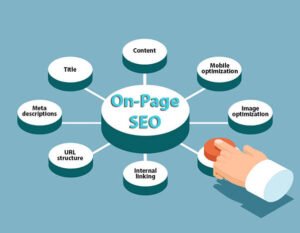
- On-Page SEO — The content and structure within each page. This covers keyword placement, heading hierarchy, title tags, meta descriptions, image alt text, and internal linking.
- Content Strategy — Creating the right pages and posts that match what your target audience is searching for, written in a way that’s genuinely helpful.
- Off-Page SEO (Link Building) — Earning links from other credible websites, which signals authority and trustworthiness to search engines.
A strong SEO strategy addresses all four. Ignoring any one of them leaves gaps that competitors can exploit.
How Namu SEO Makes the Process Simple
Most people don’t need to become SEO experts. They need someone who already is one.
Namu SEO was built specifically for businesses that want better search visibility without having to decode a 4,000-word Google algorithm update every month. The team handles the complexity so you don’t have to, and they communicate in clear, straightforward terms about what’s being done and why.
Their process starts with understanding your business — your goals, your audience, your competitors — before touching a single title tag. That context-first approach means recommendations are tailored, not generic.
From there, they build a roadmap that covers all four pillars of SEO in a logical, prioritized sequence. Quick wins come first. Longer-term strategies layer on top. Progress is tracked and reported in language that actually makes sense.
The goal isn’t to keep you dependent on an SEO agency forever. It’s to build your site’s authority steadily over time so the results compound.
On-Page SEO — The Wins You Can See Immediately
On-page SEO is often where the fastest improvements happen, which makes it a great place to start.
What does on-page SEO actually involve?
- Title tags — The clickable headline that appears in search results. Every page needs a unique, descriptive title that includes your target keyword.
- Meta descriptions — The short summary below the title in search results. While not a direct ranking factor, a well-written meta description improves click-through rates.
- Heading structure — Using H1, H2, and H3 tags properly helps both readers and search engines understand your content’s hierarchy.
- Keyword placement — Your primary keyword should appear naturally in the first paragraph, a heading or two, and throughout the body without forced repetition.
- Internal linking — Connecting related pages on your site helps visitors navigate and distributes authority across your content.
- Image optimization — Descriptive file names and alt text help search engines understand your visuals and improve accessibility.
These changes are visible, measurable, and don’t require technical expertise to understand. When Namu SEO audits a site, on-page improvements are typically among the first items on the action plan.
Technical SEO — The Foundation Most People Ignore
If on-page SEO is what search engines read, technical SEO is what lets them access your site in the first place.
A technically broken website can have excellent content and still rank poorly — because if Google can’t crawl and index your pages efficiently, none of the content work matters.
Key technical SEO factors include:
- Page speed — Google measures Core Web Vitals, including how fast your page loads and becomes interactive. Sites that lag get penalized.
- Mobile-friendliness — With mobile-first indexing, Google primarily evaluates the mobile version of your site. If it’s not responsive, you’re at a disadvantage.
- Crawl errors — Broken links, redirect chains, and blocked pages prevent search engines from fully indexing your content.
- HTTPS security — Google favors secure sites. If your site still runs on HTTP, that’s a simple fix with real impact.
- Structured data (schema markup) — This code helps search engines understand specific elements of your content, like reviews, FAQs, events, or products — and can trigger rich results in search.
Technical SEO audits can surface dozens of issues that quietly drag down your rankings without ever appearing visible to the naked eye. Getting this foundation right is non-negotiable.
Content Strategy — Writing for Humans and Search Engines
Good content does two things at once: it genuinely helps your reader, and it’s structured in a way that search engines can easily understand and rank.
Content strategy starts with keyword research — identifying the specific questions and search terms your target audience uses. From there, it’s about creating pages and posts that answer those questions better than anything else in the search results.
Practical content strategy involves:
- Targeting the right keywords — High-intent keywords (like “best plumber in [city]” or “how to fix a leaky faucet”) bring visitors who are more likely to take action.
- Matching search intent — Someone searching “what is SEO” wants an explanation, not a sales pitch. Your content needs to match what the searcher actually wants.
- Content depth — Thorough, well-organized content consistently outperforms thin pages. This doesn’t mean longer for the sake of it — it means covering a topic completely.
- Regular updates — Stale content loses rankings. Revisiting and refreshing existing pages is often as valuable as publishing new ones.
Content strategy is where your expertise as a business owner becomes a genuine SEO asset. You know your industry. A good SEO partner helps you translate that knowledge into content that ranks.
Link Building — Authority That Compounds Over Time
Links from other websites to yours act as votes of confidence in the eyes of search engines. The more credible the linking site, the more authority that link passes to you.
Link building is the most time-intensive part of SEO, but it’s also one of the most durable. A strong backlink profile continues to pay dividends long after the work is done.
Effective link building strategies include:
- Digital PR — Getting your business featured in news articles, industry publications, or roundups earns high-quality links naturally.
- Guest posting — Writing useful content for reputable sites in your niche in exchange for a link back to your site.
- Resource link building — Creating genuinely useful resources (tools, guides, data) that other sites want to link to.
- Local citations — For local businesses, consistent mentions in directories and local publications strengthen local search visibility.
What doesn’t work: buying cheap links from link farms or spammy directories. Google actively penalizes these tactics, and cleaning up a bad link profile is painful and expensive.
Seeing Real Results What to Expect and When
SEO is not instant, and anyone who tells you otherwise is selling something. But it is reliable when done correctly.
Most websites start seeing measurable movement in organic traffic within three to six months of consistent, well-executed SEO work. Highly competitive industries may take longer. Local businesses in smaller markets often see results faster.
What does “results” actually look like?
- Increased impressions and clicks in Google Search Console
- Higher rankings for target keywords
- More organic traffic from search engines
- More calls, form submissions, or purchases from that traffic
The difference between sites that see results and sites that don’t usually comes down to consistency and the quality of the strategy behind the work.
If you want to see concrete examples of what’s possible, browse real client results in the Namu SEO portfolio https://namuseo.com/portfolio including the strategies used and the outcomes achieved.
Where to Start — Your First Step Toward Better Rankings
The best starting point for any SEO effort is understanding where you currently stand.
Before you can fix anything, you need to know what’s broken, which pages are underperforming, which keywords you’re almost ranking for, where your technical issues are, and what your competitors are doing that you’re not.
A site audit gives you that full picture in one place, with clear priorities and a path forward.
You can get a free SEO audit at https://namuseo.com/audit and walk away with a concrete understanding of your website’s current strengths, weaknesses, and biggest opportunities for growth.
No jargon. No pressure. Just clarity.
FAQ
What is website SEO optimization? Website SEO optimization is the process of improving your site’s content, structure, speed, and authority so that search engines rank it higher in results bringing more organic traffic to your pages.
How long does SEO take to show results? Most sites see meaningful improvements in three to six months with consistent effort. Highly competitive markets can take longer, while local or niche businesses often see faster movement.
What’s the difference between on-page and off-page SEO? On-page SEO refers to everything you control on your own website content, titles, headings, and internal links. Off-page SEO refers to external signals, primarily backlinks from other websites, that build your site’s authority.
Do I need to blog to rank on Google? Not always, but a content strategy that includes regular, helpful content significantly increases the number of keywords your site can rank for and gives other sites more reasons to link to you.
Is Namu SEO right for small businesses? Yes , Namu SEO was designed with small and growing businesses in mind. Known in multilingual markets as 나무SEO, the agency focuses on clear communication, realistic timelines, and strategies that make sense for businesses that don’t have an in-house marketing team.
Can I do SEO myself or do I need an agency? You can absolutely learn and apply the basics yourself. But if your time is better spent running your business, working with an SEO partner like Namu SEO means you get expert execution without having to build that expertise from scratch.
You’re Closer Than You Think
SEO optimization doesn’t have to mean months of confusion, technical rabbit holes, or wondering if anything is actually working.
When you break it down into its core parts: good content, a healthy technical foundation, smart on-page structure, and earned authority it becomes a clear, manageable process. One step at a time, one page at a time, one link at a time.
The businesses that win at SEO aren’t necessarily the ones with the biggest budgets. They’re the ones that start, stay consistent, and work with people who know what they’re doing.
Source: FG Newswire