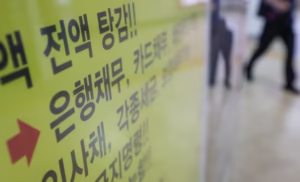
Financial hardship can strike anyone, and when debt becomes overwhelming, personal bankruptcy may offer a path to a fresh financial start. In South Korea, the personal bankruptcy system provides legal mechanisms for individuals to discharge certain debts and rebuild their financial lives. Understanding which debts are discharged and which are not is crucial for anyone considering bankruptcy in Korea.
This comprehensive guide explains the Korean personal bankruptcy system, details which debts can be forgiven, outlines the bankruptcy process, and provides practical guidance for those facing financial difficulties.
Understanding the Korean Personal Bankruptcy System
South Korea’s personal bankruptcy 개인파산 framework operates under the Debtor Rehabilitation and Bankruptcy Act (DRBA), which was enacted to provide relief to individuals and businesses unable to meet their financial obligations. The system balances two important objectives: giving honest debtors a fresh start while ensuring fair treatment of creditors.
The Korean bankruptcy system recognizes that financial distress can result from circumstances beyond an individual’s control, such as job loss, medical emergencies, business failure, or economic downturns. Rather than leaving people trapped in perpetual debt, the law provides structured procedures to resolve insolvency while maintaining basic human dignity.
Historical Context and Legal Framework
Korea’s modern bankruptcy laws have evolved significantly since the 1997 Asian financial crisis, which left millions of Koreans in financial distress. The government reformed bankruptcy procedures to make them more accessible and efficient, recognizing that excessive debt burdens harm not only individuals but the broader economy.
The current system emphasizes rehabilitation over liquidation when possible, encouraging debtors to repay what they reasonably can while providing discharge for amounts beyond their capacity.
Types of Personal Bankruptcy Procedures in Korea
Korean law offers two primary bankruptcy procedures for individuals, each designed for different financial situations:
Individual Rehabilitation (개인회생)
Individual rehabilitation, also known as personal workout or individual recovery, is designed for debtors who have regular income but cannot fully repay their debts. This procedure allows debtors to:
- Keep their assets while repaying a portion of their debts
- Follow a court-approved repayment plan (typically 3-5 years)
- Receive discharge of remaining eligible debts after completing the plan
- Maintain their employment and business activities during the process
Eligibility requirements include:
- Having a regular income or a reasonable expectation of income
- Total secured debts under 1 billion won
- Total unsecured debts under 500 million won
- Good faith in accumulating debts (not through fraud or intentional misconduct)
Individual rehabilitation is ideal for salaried employees, business owners with ongoing operations, and self-employed individuals who want to avoid liquidation of their assets.
Personal Bankruptcy and Discharge (개인파산 및 면책)
Personal bankruptcy involves liquidating the debtor’s non-exempt assets to pay creditors, followed by the discharge of remaining eligible debts. This procedure is appropriate when:
- The debtor has no regular income or insufficient income for rehabilitation
- The debtor’s assets are minimal and insufficient to repay debts
- The debtor seeks complete discharge without ongoing repayment obligations
The process has two stages:
- Bankruptcy declaration: The court declares the debtor bankrupt and appoints a trustee to collect and distribute assets
- Discharge decision: After asset distribution, the court decides whether to grant discharge of remaining debts
Unlike individual rehabilitation, personal bankruptcy may result in loss of certain assets, though Korean law protects essential property needed for basic living.
Which Debts Are Discharged in Korean Bankruptcy?
Understanding which debts receive discharge is essential for evaluating whether bankruptcy offers meaningful relief in your situation.
Dischargeable Debts: What Gets Forgiven
The following debts are generally dischargeable through Korean bankruptcy procedures:
Credit Card Debts
Credit card balances represent one of the most common dischargeable debts. This includes:
- Outstanding card balances
- Cash advances
- Card loans
- Accumulated interest and late fees
Credit card debt is typically fully dischargeable unless accumulated through fraudulent means (using a fake identity, lying about income, or making purchases immediately before filing with the intent not to repay).
Personal Loans and Consumer Finance
Loans from banks, savings banks, and consumer finance companies are generally dischargeable:
- Unsecured personal loans
- Consumer installment loans
- Cash loans
- Peer-to-peer lending debts
- Private money lending (when properly documented)
Medical Bills
Healthcare costs not covered by insurance can be discharged, including:
- Hospital bills
- Surgical costs
- Long-term treatment expenses
- Prescription medication costs
Business Debts
For entrepreneurs and business owners, many business-related obligations are dischargeable:
- Business loans are personally guaranteed
- Supplier and vendor debts
- Commercial lease obligations
- Business credit card debts
Deficiency Balances After Asset Sales
When secured property (homes, vehicles) is sold for less than the loan balance, the remaining deficiency is typically dischargeable.
Utility Arrears
Past-due bills for electricity, gas, water, and telecommunications services can be discharged, though utilities may require deposits for future service.
Civil Judgments
Court judgments from civil lawsuits for breach of contract, property damage, or other civil matters are generally dischargeable.
Which Debts Are NOT Discharged: Obligations That Remain
Korean bankruptcy law specifically excludes certain debts from discharge to protect important social interests:
Non-Dischargeable Debts
Tax Obligations
Government tax debts cannot be discharged:
- Income tax
- Value-added tax (VAT)
- Property tax
- Automobile tax
- Customs duties
Tax obligations survive bankruptcy, though payment plans may be negotiated with tax authorities.
Fines and Penalties
Criminal and administrative fines remain enforceable:
- Traffic fines
- Criminal penalty fines
- Administrative sanctions
- Court-imposed penalties
Child Support and Alimony
Family support obligations are non-dischargeable:
- Child support arrears and ongoing obligations
- Spousal maintenance (alimony)
- Family court-ordered support payments
Korean law prioritizes children’s welfare and family support obligations above creditor interests.
Student Loans (Selective)
Government-sponsored student loans may be non-dischargeable depending on specific circumstances and loan terms, though some relief may be available through separate government programs.
Fraudulently Incurred Debts
Debts obtained through intentional fraud, misrepresentation, or deceptive practices are not discharged:
- Loans obtained with false information
- Debts incurred immediately before bankruptcy with no intent to repay
- Conversion or misappropriation of others’ property
Intentional Torts and Criminal Restitution
Obligations arising from intentional wrongdoing:
- Damages from intentional assault or injury
- Criminal restitution orders
- Embezzlement or theft obligations
Debts Not Listed in Bankruptcy Petition
Debts not disclosed in your bankruptcy filing may not receive discharge, emphasizing the importance of thorough and honest disclosure.
The Korean Bankruptcy Discharge Process
Understanding the procedural steps helps you prepare for what to expect:
Step 1: Pre-Filing Preparation (1-2 months)
- Gather financial documentation (income records, debt statements, asset lists)
- Consult with a bankruptcy attorney or legal aid organization
- Complete mandatory credit counseling
- Determine which procedure (rehabilitation vs. bankruptcy) is appropriate
Step 2: Filing the Petition (Day 1)
Submit your bankruptcy petition to the district court with jurisdiction:
- Complete financial disclosure forms
- List all creditors and debt amounts
- Inventory all assets and income sources
- Pay filing fees (fee waivers available for indigent debtors)
Step 3: Automatic Stay and Initial Review (Weeks 1-4)
Upon filing, an automatic stay immediately stops:
- Collection activities
- Lawsuits
- Wage garnishments
- Asset seizures
The court reviews your petition for completeness and eligibility.
Step 4: Creditor Notification and Claims Period (Months 1-2)
The court notifies all listed creditors, who may:
- File claims for amounts owed
- Object to discharge if grounds exist
- Attend creditor meetings
Step 5: Repayment Plan or Asset Liquidation
For Individual Rehabilitation:
- Court approves repayment plan (typically 3-5 years)
- Monthly payments are made to the court-appointed trustee
- Trustee distributes funds to creditors proportionally
For Personal Bankruptcy:
- Trustee collects and liquidates non-exempt assets
- Proceeds are distributed to creditors by priority
- Process typically completed within 6-12 months
Step 6: Discharge Decision (End of Process)
Individual Rehabilitation: After completing all plan payments, court grants discharge of remaining eligible debts.
Personal Bankruptcy: After asset distribution, the court evaluates whether the debtor qualifies for discharge based on conduct and honesty throughout the process.
Timeline Expectations
- Individual Rehabilitation: 3-5 years total (duration of repayment plan)
- Personal Bankruptcy: 6-18 months from filing to discharge
Eligibility Requirements and Qualifications
Not everyone qualifies for bankruptcy discharge. Korean courts evaluate several factors:
Basic Eligibility Criteria
- Residency: Must have domicile or residence in Korea
- Insolvency: Unable to pay debts as they become due
- Good Faith: Debts incurred honestly without fraud
- Cooperation: Willingness to provide complete financial disclosure
- No Recent Bankruptcy: Generally, cannot file if discharged within the past 7 years
Grounds for Discharge Denial
Courts may deny discharge if the debtor:
- Concealed or transferred assets to avoid creditors
- Provided false information in bankruptcy documents
- Failed to cooperate with the trustee or the court
- Incurred debts through gambling, speculation, or wasteful spending
- Destroyed or falsified financial records
- Previously received discharge within a restricted timeframe
Special Considerations
The court exercises discretion in evaluating discharge applications, considering:
- Circumstances leading to financial distress
- Debtor’s efforts to repay before filing
- Honesty and transparency throughout proceedings
- Impact on creditors
- Likelihood of rehabilitation
Consequences and Benefits of Bankruptcy Discharge
Understanding both the positive and negative impacts helps you make informed decisions:
Benefits of Discharge
Immediate Relief:
- Elimination of dischargeable debts
- End to collection harassment and lawsuits
- Protection from wage garnishment
- Reduced financial stress and anxiety
Fresh Financial Start:
- Opportunity to rebuild credit over time
- Ability to budget without overwhelming debt burden
- Improved mental health and quality of life
- Freedom to pursue employment and business opportunities
Legal Protection:
- Court-supervised process prevents creditor abuse
- Automatic stay provides breathing room
- Discharge is permanent and legally binding
Negative Consequences
Credit Impact:
- Bankruptcy remains on credit reports for 7-10 years
- Difficulty obtaining new credit initially
- Higher interest rates on future loans
- Potential challenges of renting housing
Professional Restrictions:
- Temporary restrictions on certain licensed professions
- Limitations on serving as a corporate director
- Potential employment impacts in the financial sector
Asset Loss (Personal Bankruptcy):
- Non-exempt assets may be liquidated
- Possible loss of luxury items or non-essential property
Social Stigma:
- Cultural attitudes toward bankruptcy may cause embarrassment
- Potential impact on personal relationships
Practical Guidance for Those Considering Bankruptcy
If you’re struggling with debt, consider these practical steps:
Before Filing Bankruptcy
- Explore Alternatives: Consider debt consolidation, negotiation with creditors, or consumer credit counseling
- Understand Your Options: Learn the differences between rehabilitation and bankruptcy
- Calculate Realistic Outcomes: Determine which debts would actually be discharged
- Gather Documentation: Organize financial records, debt statements, and income proof
- Seek Professional Advice: Consult with bankruptcy attorneys or legal aid organizations
During the Bankruptcy Process
- Maintain Complete Honesty: Disclose all assets, income, and debts fully
- Cooperate Fully: Respond promptly to trustee and court requests
- Continue Basic Obligations: Pay non-dischargeable debts like child support
- Avoid New Debt: Don’t incur additional obligations during proceedings
- Attend Required Meetings: Show up for creditor meetings and court hearings
After Discharge
- Rebuild Credit Gradually: Start with secured credit cards or small loans
- Create a Budget: Develop sustainable spending and saving habits
- Build Emergency Fund: Establish a financial cushion to avoid future crisis
- Monitor Credit Reports: Ensure discharged debts are properly reported
- Seek Financial Education: Learn money management skills to prevent recurrence
Conclusion: Making an Informed Decision
Korean personal bankruptcy offers valuable debt relief for those facing genuine financial hardship, with provisions to discharge most common consumer debts, including credit cards, personal loans, and medical bills. However, important obligations like taxes, fines, and family support survive bankruptcy.
The choice between individual rehabilitation and personal bankruptcy depends on your income, assets, and financial goals. Rehabilitation allows you to keep assets while making affordable payments, whereas bankruptcy may eliminate debts more quickly but involves asset liquidation.
Before proceeding, thoroughly evaluate your situation, understand which of your specific debts would be discharged, and consider alternatives. Professional guidance from bankruptcy attorneys, 개인회생 변호사, or legal aid organizations can help you navigate this complex process and make the decision that best serves your path to financial recovery.
Remember that bankruptcy is not a moral failure but a legal tool designed to give honest debtors a fresh start. With careful planning, complete honesty, and commitment to financial rehabilitation, Korean bankruptcy procedures can provide the relief needed to rebuild your financial life.
Source: FG Newswire